


Idolatry Meaning in the Bible: What It Is and Why It Still Matters Today
Quick Answer
Idolatry in the Bible means giving worship, trust, devotion, love, fear, or obedience to anything or anyone in the place of God. It can involve bowing before physical idols, but it also includes anything that takes God’s rightful place in the heart. An idol may be a carved image, false god, person, desire, possession, achievement, relationship, nation, comfort, political party, system, money, power, or self. Biblical idolatry is not only about what someone bows down to outwardly. It is about what rules the heart inwardly.
Idolatry is treating anything as ultimate that is not God.
Biblical Meaning
The word idolatry means the worship of idols or false gods. In the Old Testament, several Hebrew words are connected to idols. One is pesel, which means “carved image” or “graven image.” Another is elil, often used for worthless idols or false gods that have no true power. The prophets often used strong language to show that idols are lifeless, powerless, and unable to save.
In the New Testament, the Greek word often translated idolatry is eidōlolatria. It comes from eidōlon, meaning “idol” or “image,” and latreia, meaning “service” or “worship.” So, in simple terms, idolatry means the worship or service of an idol.
Biblically, idolatry is not only a religious mistake. It is spiritual unfaithfulness. God alone is Creator, Redeemer, Lord, and Savior. When people give their highest devotion to something else, they are turning away from the One who made them and deserves their worship.
What the Bible Says
The Bible speaks clearly against idolatry. The first commandment says, “You shall have no other gods before me” (Exodus 20:3). The second commandment forbids making carved images for worship. From the beginning of Israel’s covenant life, God made it clear that His people were to worship Him alone.
Deuteronomy 6:4–5 says, “Hear, Israel: Yahweh is our God. Yahweh is one. You shall love Yahweh your God with all your heart, with all your soul, and with all your might.” True worship requires wholehearted love. Idolatry divides that love and gives it to something unworthy.
The prophets repeatedly confronted idolatry because it corrupted both worship and daily life. Isaiah mocked the foolishness of making an idol from wood, using part of the wood for a fire and another part to make a god. Jeremiah warned that idols are like scarecrows in a cucumber field; they cannot speak, move, do good, or do harm.
The New Testament continues the warning. First John 5:21 says, “Little children, keep yourselves from idols.” Paul also tells believers to flee from idolatry in 1 Corinthians 10:14. Colossians 3:5 connects covetousness with idolatry, showing that an idol can be more than a statue. A desire can become an idol when it rules the heart.
Biblical Context
Idolatry must be understood in the larger story of Scripture. God created human beings to know Him, love Him, worship Him, and reflect His image. Worship is not a small part of life. It is central to what we were made for.
Sin distorts worship. Instead of honoring the Creator, human beings often turn created things into ultimate things. Romans 1 describes this exchange clearly: people exchange the glory of the incorruptible God for images and created things. That is the heart of idolatry: exchanging God’s glory for something lesser.
This is why idolatry is so serious. It is not simply choosing the wrong religious object. It is a reversal of reality. The creature tries to replace the Creator. The gift becomes more important than the Giver. The human heart looks to created things for identity, security, satisfaction, control, or salvation.
Idolatry also enslaves. Whatever we worship begins to shape us. If someone worships money, fear of loss will rule them. If achievement becomes an idol, failure will destroy their peace. When comfort becomes ultimate, obedience will feel unbearable. A false god always makes promises it cannot keep and demands more than it can ever give.
Old Testament Background
The Old Testament is filled with warnings against idolatry because Israel lived among nations that worshiped many gods. The Lord called Israel to be different. They were not to worship the gods of Egypt, Canaan, Babylon, or any surrounding nation. They belonged to Yahweh.
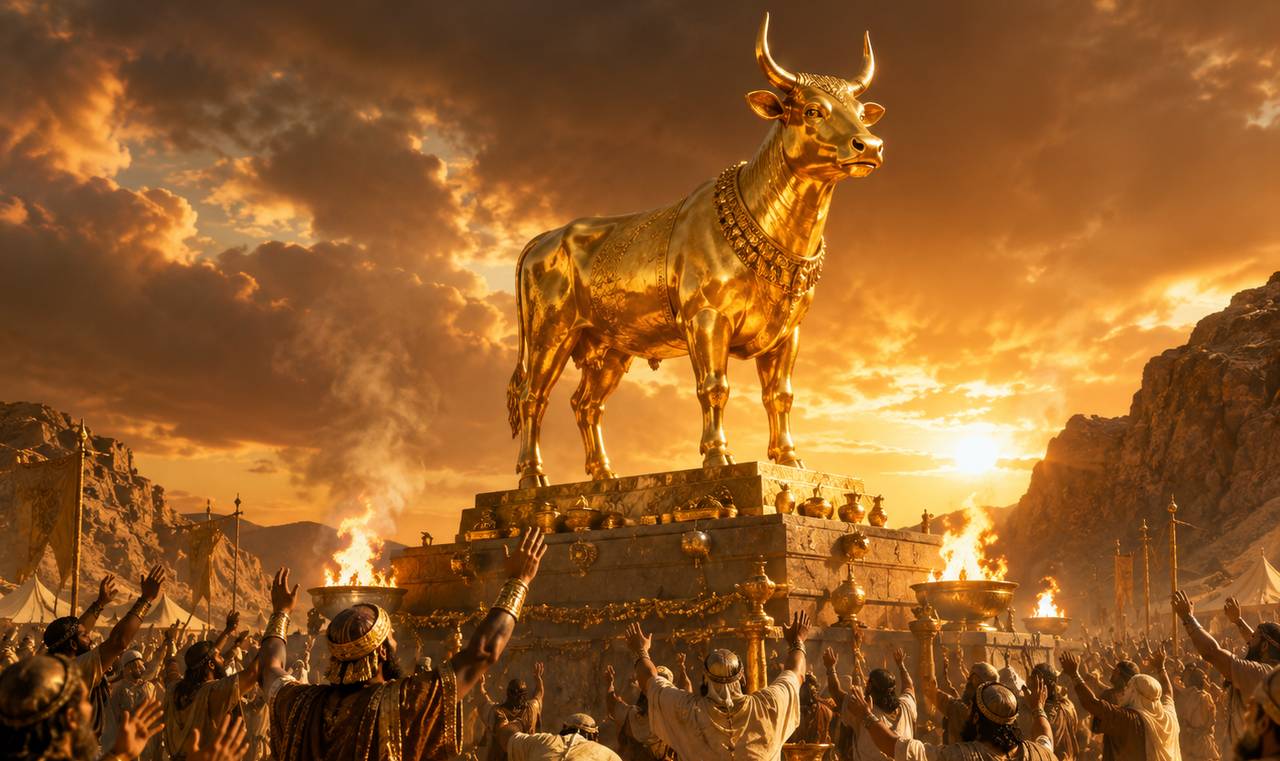
One of the clearest examples is the golden calf in Exodus 32. While Moses was on Mount Sinai, the people grew impatient and asked Aaron to make gods for them. Aaron made a calf from gold, and the people worshiped it. This happened shortly after God had delivered Israel from Egypt. Their idolatry was not just foolish; it was betrayal.
The prophets later confronted Israel and Judah for turning to Baal, Asherah, and other false gods. These idols were often tied to fertility, power, security, and national success. God’s people were tempted to believe that the gods of the nations could give them what the Lord had not.
Idolatry also led to injustice. False worship corrupted how people lived. When Israel turned from God, they also neglected the poor, practiced violence, trusted corrupt leaders, and treated worship as an empty ritual. The prophets showed that idolatry is never only vertical. When worship is distorted, life becomes distorted.
The exile itself was connected to covenant unfaithfulness. God’s people had been warned again and again, yet they continued turning from Him. Still, the Old Testament also holds out hope. God promised restoration, cleansing, and a renewed heart.
New Testament Teaching
The New Testament expands the issue of idolatry beyond physical images. The Greco-Roman world was filled with temples, statues, sacrifices, and religious devotion to many gods. Early Christians had to separate themselves from pagan worship while living in societies where idolatry was normal.
Paul’s letters repeatedly warn believers not to return to idols. In 1 Corinthians, he teaches that Christians cannot share in the table of the Lord and the table of demons. Worship is not neutral. What people participate in spiritually matters.
Colossians 3:5 makes the teaching even more personal by saying covetousness is idolatry. This shows that idolatry can live inside respectable desires. A person may never bow before a statue and still be ruled by greed, lust, pride, approval, control, or ambition.
Jesus also exposes the heart of idolatry when He says no one can serve two masters. In Matthew 6:24, He says, “You can’t serve both God and Mammon.” Money is not evil in itself, but it becomes idolatrous when it becomes master, security, identity, or hope.
The New Testament answer to idolatry is not just removing visible idols. It is turning to the living God through Jesus Christ. First Thessalonians 1:9 describes believers who turned “to God from idols, to serve a living and true God.” That is the movement of repentance, turning from false gods to the true God.
Common Misunderstandings
One common misunderstanding is that idolatry only means worshiping statues. The Bible certainly condemns bowing before carved images, but it also reveals that the human heart can turn almost anything into an idol.
Another mistake is assuming idols are always bad things. Many idols begin as good gifts. Family, work, ministry, money, comfort, marriage, children, success, beauty, influence, and security can all become idols if they take God’s place.
Some people think idolatry is only a problem for ancient people. Modern culture may not always bow before golden statues, but it constantly invites people to worship self, pleasure, status, power, romance, politics, technology, fame, and personal freedom.
Another confusion is treating idolatry as merely external behavior. Scripture goes deeper. An idol is often revealed by what we cannot surrender, what we fear losing most, what we run to for comfort, what we obey despite God’s Word, or what we believe we must have to be happy.
A final misunderstanding is thinking repentance from idolatry means rejecting all earthly joys. God is not against His gifts. He is against His gifts becoming gods. The answer is not despising creation, but loving the Creator above all.
What This Means Today
Idolatry matters today because the human heart has not changed. People still look to created things for what only God can give. We want security, identity, control, comfort, belonging, approval, and meaning. Those desires are not always wrong, but they become dangerous when they become ultimate.
Modern idols may look ordinary. A career can become an idol when success defines our worth. A relationship can become an idol when we disobey God to keep it. Politics can become an idol when a leader, party, or nation carries the hope that belongs to Christ. Money becomes an idol when it promises safety more than God does. Even ministry can become an idol when visibility matters more than faithfulness.
The question is not only, “What do I believe?” It is also, “What do I love most? What do I fear most? What controls my decisions? What am I unwilling to surrender? What do I turn to when I feel empty, anxious, or afraid?”
For Christians, repentance from idolatry is part of daily discipleship. The heart must be continually brought back to God. This does not happen through shame alone. It happens as we see the beauty, worth, holiness, mercy, and sufficiency of the Lord.
Jesus frees us from idols by giving us something better than what idols promise. Idols demand everything and save nothing. Christ gives Himself, forgives sinners, restores worship, and teaches us to love God with an undivided heart.
Key Takeaways
Idolatry means giving worship, trust, devotion, or ultimate love to anything other than God.
The Hebrew word pesel means carved image, and the Greek word eidōlolatria means idol worship or service to idols.
Idolatry can involve physical images, but it can also involve money, power, relationships, comfort, success, politics, or self.
The Bible treats idolatry as spiritual unfaithfulness, not merely a religious mistake.
Old Testament prophets confronted idolatry because false worship corrupted both the heart and society.
The New Testament teaches that covetousness and divided loyalty can also be forms of idolatry.
The answer to idolatry is repentance, renewed worship, and turning to the living God through Jesus Christ.
Reflection Questions
- What do I turn to first when I feel afraid, empty, insecure, or out of control?
- Is there anything in my life I would struggle to surrender if God asked me to release it?
- Have I allowed money, success, relationships, comfort, politics, or approval to shape my identity more than Christ?
- What good gift from God am I tempted to treat as an ultimate thing?
- How can I return to worshiping God with a more undivided heart this week?
Closing Prayer
Father, reveal every idol that has taken Your place in our hearts. Forgive us for trusting created things more than the Creator. Teach us to love You above all, serve You with sincerity, and receive Your gifts without worshiping them. Lead us away from false gods and deeper into faithful worship through Jesus Christ. Amen.
 7 Min
7 Min
What Is Biblical Worship?
Biblical worship is more than singing songs at church. It is the surrendered response of the whole life to the worth, holiness, and glory of God.
 8 Min
8 Min
What Is Morality Without Surrender to God?
Morality without surrender to God may look good outwardly, but Scripture teaches that true righteousness begins with a heart yielded to Him.
 5 Min
5 Min
What Is Faith? A Beginner’s Guide to Trusting God
What is faith? This beginner-friendly Christian guide explains biblical faith as trust in God, not mere agreement with facts, and shows how faith in Jesus changes the whole life.
 8 Min
8 Min
Is Hell Real? What Scripture Teaches About Judgment, Sin, and Eternal Separation from God
Hell is one of the most serious teachings in the Bible. Learn what Scripture says about hell, judgment, sin, Gehenna, Hades, the lake of fire, and why Jesus came to save sinners.


