

Quick Answer
Biblical worship is the right response of the whole person to the glory, holiness, mercy, and worth of God. It includes singing, prayer, Scripture, giving, confession, obedience, service, reverence, and daily surrender. Worship is not limited to music or a church service. It is the posture of a life that recognizes God as Creator, Redeemer, King, Father, and Lord.
The word worship is often reduced to a style of music. People say, “The worship was good today,” and usually mean the songs were moving, the band sounded strong, or the atmosphere felt spiritual. Music can be a beautiful part of worship, but biblical worship is much deeper than a song.
Jesus said in John 4:23–24 that true worshipers worship the Father “in spirit and truth.” That means worship must be sincere and grounded in what is true. It is not merely emotional expression. It is not empty ritual. It is not performance. It is the heart, mind, body, and life responding rightly to God.
Worship Begins With the Worth of God
The English word worship is connected to the idea of worth. To worship God is to recognize His supreme worth. He is not one priority among many. He is the One from whom all life comes and to whom all life belongs.
The Old Testament Hebrew word often translated “worship” is שָׁחָה — shachah. It means to bow down, prostrate oneself, do reverence, or worship. Psalm 95:6 says, “Oh come, let us worship and bow down; let us kneel before the Lord, our Maker!” Worship begins here: God is our Maker. We did not create ourselves. We do not belong to ourselves. We are not the center of reality.
Another important Hebrew word is עָבַד — abad. It means to work, serve, labor, or serve God. This matters because in Hebrew thought, worship is not separated from service. To worship God is not only to bow before Him, but to serve Him. Worship includes obedience, daily faithfulness, work done unto the Lord, and covenant loyalty.
Biblical worship begins when the human heart stops trying to sit on the throne and bows before the One who already reigns.
This is why worship and humility belong together. To worship God is to admit that He is holy and we are not. He is eternal and we are temporary. He is self-sufficient and we are dependent. He is wise and we need instruction. He is Savior and we need mercy.
The more clearly we see God, the more rightly we worship.
Worship Is More Than Music
Music fills the Bible. The Psalms are songs and prayers. Israel sang after deliverance from Egypt. The early church sang hymns. Paul told believers to sing “psalms and hymns and spiritual songs” with thankfulness in their hearts to God (Colossians 3:16).
So music matters. Singing allows truth to move through the heart. It helps believers remember doctrine, lament honestly, rejoice deeply, and unite as the people of God.
But music is not the whole of worship.
Romans 12:1 says, “Present your bodies as a living sacrifice, holy and acceptable to God, which is your spiritual worship.” Paul does not limit worship to the mouth. He includes the body. Worship involves what we do with our lives, our habits, our decisions, our relationships, our money, our sexuality, our work, our speech, and our time.
A person can sing passionately and still refuse to obey God. A person can raise hands in church and still harbor bitterness, pride, greed, or secret sin. Scripture repeatedly warns against worship that sounds spiritual but lacks surrender.
Through the prophet Isaiah, God said, “This people draw near with their mouth and honor me with their lips, while their hearts are far from me” (Isaiah 29:13). Jesus repeated this warning in Matthew 15:8–9.
Biblical worship is never merely the sound of praise. It is the surrender of the heart.
Worship in Spirit and Truth
When Jesus spoke with the Samaritan woman in John 4, she raised a question about the proper place of worship. Samaritans worshiped on Mount Gerizim, while Jews worshiped in Jerusalem. Jesus answered by pointing beyond location to the nature of true worship.
“The hour is coming, and is now here,” He said, “when the true worshipers will worship the Father in spirit and truth” (John 4:23).
To worship in spirit means worship must come from the inner person. It must not be hollow, mechanical, or merely external. God is not impressed by religious performance when the heart is far from Him.
To worship in truth means worship must be shaped by who God has revealed Himself to be. We do not worship a god of our imagination. We worship the God revealed in Scripture and fully made known in Jesus Christ.
This matters because sincerity alone is not enough. A person can be sincere and still worship falsely. Truth alone, treated coldly, is also not enough. A person can have correct doctrine and still lack love, awe, repentance, and devotion.
Biblical worship is both spirit and truth. It is heartfelt and Scripture-shaped. Passionate and reverent. Personal and doctrinal. Joyful and obedient.
Worship Includes Reverence
Modern worship language often emphasizes intimacy with God, and rightly so. Through Christ, believers are invited to call God Father. Hebrews 4:16 tells us to draw near to the throne of grace with confidence.
But confidence is not casualness. Intimacy does not erase reverence.
Hebrews 12:28–29 says, “Let us offer to God acceptable worship, with reverence and awe, for our God is a consuming fire.” Biblical worship carries holy fear. Not the fear of a slave who expects cruelty, but the reverence of a child who knows the Father is holy.
Reverence reminds us that God is not entertainment. Worship is not a concert, mood, brand, or emotional product. The church does not gather to evaluate God. We gather because God is worthy.
This does not mean worship must be cold or formal. Scripture includes shouting, singing, kneeling, silence, weeping, dancing, confession, and joy. Reverence is not about one personality type or worship style. Reverence is the heart’s awareness that we are approaching the living God.
Worship and Obedience Cannot Be Separated
One of the clearest themes in Scripture is that God rejects worship separated from obedience.
In Amos 5, God rebuked Israel’s songs and religious gatherings because the people practiced injustice. They maintained worship forms while ignoring righteousness. God said, “Let justice roll down like waters, and righteousness like an ever-flowing stream” (Amos 5:24).
This is a serious warning. Worship cannot be used to cover disobedience.
Jesus said, “If you love me, you will keep my commandments” (John 14:15). Obedience does not earn God’s love, but it does reveal whether our worship is real. A surrendered heart wants to please the Lord.
True worship affects how we speak to our spouse, how we treat our children, how we handle money, how we forgive enemies, how we care for the vulnerable, how we respond to temptation, and how we live when no one sees.
Worship is not only what happens when the church sings. Worship is what happens when the believer says, “Lord, not my will, but Yours.”
Worship Is Both Personal and Corporate
The Bible shows both private and gathered worship. Jesus withdrew to pray. David poured out his heart to God in the Psalms. Daniel prayed faithfully even under pressure. Personal worship matters because love for God must not depend only on public settings.
But worship is also corporate. The church gathers as the body of Christ. Acts 2:42 describes early believers devoting themselves to the apostles’ teaching, fellowship, breaking of bread, and prayers. Hebrews 10:24–25 tells believers not to neglect meeting together.
Corporate worship reminds us that Christianity is not an isolated spirituality. We belong to God and to one another. We hear the Word together. We confess together. We sing together. We remember the gospel together. We bear witness together.
Private worship forms the heart. Corporate worship forms the people.
Both are needed.
Worship and Idolatry
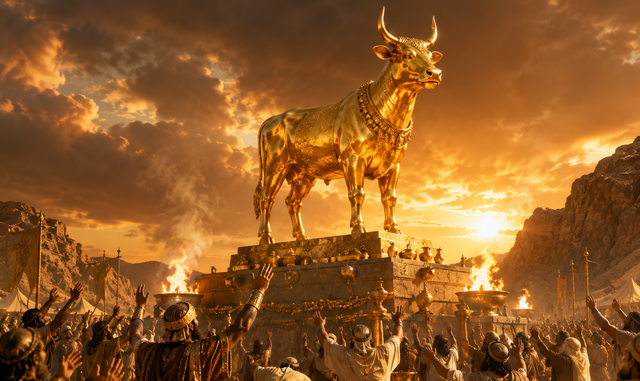
The opposite of worship is not simply unbelief. Often, the opposite of true worship is false worship.
Human beings were made to worship. If we do not worship God, we will worship something else. Success, comfort, money, romance, politics, self-image, control, pleasure, family, reputation, nation, ministry, or even morality can become idols.
Romans 1 describes humanity exchanging the glory of God for created things. That exchange is the essence of idolatry. We take something God made and treat it as ultimate.
This is why worship is not optional. Everyone worships. The question is whether our worship is directed toward the true God.
A helpful question is: What receives my deepest trust, fear, hope, attention, sacrifice, and obedience? The answer may reveal what I worship.
What Biblical Worship Looks Like Today
Biblical worship today looks like singing with sincerity and living with surrender.
It looks like opening Scripture not merely to gain information, but to hear God.
It looks like confessing sin instead of hiding it.
It looks like forgiving because Christ forgave us.
It looks like gathering with the church even when life is busy.
It looks like praising God in suffering and thanking Him in blessing.
It looks like refusing idols that promise identity, security, pleasure, or control.
It looks like offering ordinary life to God: work, family, rest, service, generosity, hospitality, prayer, and obedience.
The most important question is not, “Did I enjoy worship?” The better question is, “Was God honored, and did I offer myself to Him?”
Key Takeaways
- Biblical worship is the whole-life response to the worth and glory of God.
- Worship includes music, but it is not limited to music.
- True worship must be in spirit and truth.
- God desires worship that includes reverence, obedience, humility, and love.
- False worship happens when created things take the place of God.
- The surrendered life is worship.
Reflection Questions
- Do I think of worship mostly as music, or as the offering of my whole life to God?
- Is there any area where I praise God with my lips but resist Him with my choices?
- What idols compete for my trust, attention, fear, or obedience?
- How can I prepare my heart before gathered worship?
- What would it look like to worship God this week through obedience, service, and surrender?
Closing Prayer
Father, teach me to worship You with my whole life. Forgive me for reducing worship to songs while withholding parts of my heart. Help me worship You in spirit and truth. Let my words, thoughts, habits, relationships, work, and private life honor You. Remove idols from my heart and make my life a living sacrifice. In Jesus’ name, amen.