



Opening Prayer
Lord, open our hearts to understand prayer not only as words we say, but as a relationship You invite us into. Give us discernment, humility, and a deeper desire to seek You in truth. In Jesus’ name, amen.
Prayer is one of the most familiar words in Christianity, yet many believers quietly wonder if they are doing it right. Some imagine prayer as a formal speech filled with religious language. Others think of it as a desperate cry during emergencies. A few carry guilt because their prayers feel distracted, inconsistent, or too ordinary to matter.
Scripture gives us a richer picture. Prayer is not performance before God. It is communion with God. It is the way God’s people speak to Him, listen for His truth, confess sin, ask for help, give thanks, intercede for others, and surrender their lives before His will.
At its simplest, prayer is talking with God. Still, biblical prayer is more than talking into the air. Christians pray because God is personal, present, holy, loving, sovereign, and near. Prayer rests on the truth that God hears His people and invites them to come to Him.
The Biblical Meaning of Prayer
Throughout the Bible, prayer appears in many forms. Abraham speaks with God about Sodom. Moses intercedes for Israel. Hannah pours out her soul before the Lord. David cries, laments, confesses, praises, and worships through the Psalms. Daniel prays even when prayer becomes dangerous. Jesus withdraws to lonely places to pray. The early church devotes itself to prayer as it waits, suffers, worships, and witnesses.
That range matters because it shows prayer is not limited to one emotional state. Prayer can be joyful, tearful, quiet, urgent, structured, spontaneous, public, private, brief, or long. The common thread is not the style of the prayer, but the direction of the heart toward God.
In Scripture, prayer is often connected to dependence. People pray because they know they are not self-sufficient. They need mercy, wisdom, forgiveness, provision, courage, healing, and guidance. Prayer teaches the soul to stop pretending it can carry life alone.
Why Christians Pray
Many people ask, “If God already knows everything, why pray?” The Bible does not present prayer as a way of informing God. He already knows our needs before we ask, as Jesus says in Matthew 6:8. Prayer is not about giving God information. It is about entering relationship, practicing trust, and aligning our hearts with His will.
A child does not speak to a loving father because the father lacks awareness. The child speaks because relationship requires nearness. In a similar way, believers pray because God has made Himself known as Father through Jesus Christ. Prayer is one of the ways Christians live as children of God rather than spiritual orphans.
Prayer also changes us. It slows our pride. It exposes our fears. It brings hidden desires into God’s light. It reminds us that we are not in control, but we are not abandoned. Through prayer, the believer learns to bring real life before the Lord instead of separating “spiritual things” from daily concerns.
How Jesus Taught His Disciples to Pray
When the disciples asked Jesus to teach them to pray, He gave them what Christians often call the Lord’s Prayer. In Matthew 6:9–13, Jesus begins with worship: “Our Father in heaven, may your name be kept holy.” Prayer starts by remembering who God is before rushing into what we want.
The prayer then moves through surrender, provision, forgiveness, protection, and deliverance. “Let your Kingdom come. Let your will be done, as in heaven, so on earth.” That line reminds us prayer is not merely asking God to bless our plans. It is learning to desire His kingdom, His righteousness, and His purposes.
Daily bread appears in the prayer because God cares about ordinary needs. Forgiveness appears because prayer must deal honestly with sin. Protection appears because Christians live in a world of temptation, evil, weakness, and spiritual opposition.
Jesus’ model is simple enough for a child to pray and deep enough for a lifetime of spiritual formation.
Prayer Is Not Performance
One of Jesus’ strongest warnings about prayer concerns hypocrisy. In Matthew 6, He warns against praying in order to be seen by others. Religious language can become a stage. Spiritual practices can turn into reputation management. Public prayer can quietly become more about impressing people than meeting with God.
That warning does not mean public prayer is wrong. Scripture includes many examples of corporate prayer. The issue is the heart. Prayer loses its integrity when it becomes a performance rather than communion.
This should comfort believers who feel their prayers are unimpressive. God is not grading vocabulary. He is not moved by empty length, dramatic tone, or polished phrases. The tax collector in Luke 18 simply prayed, “God, be merciful to me, a sinner!” Jesus said that man went home justified rather than the religious leader who trusted in his own righteousness.
Honest prayer matters more than impressive prayer.
The Different Kinds of Prayer in the Bible
Biblical prayer includes praise, thanksgiving, confession, lament, petition, intercession, and surrender.
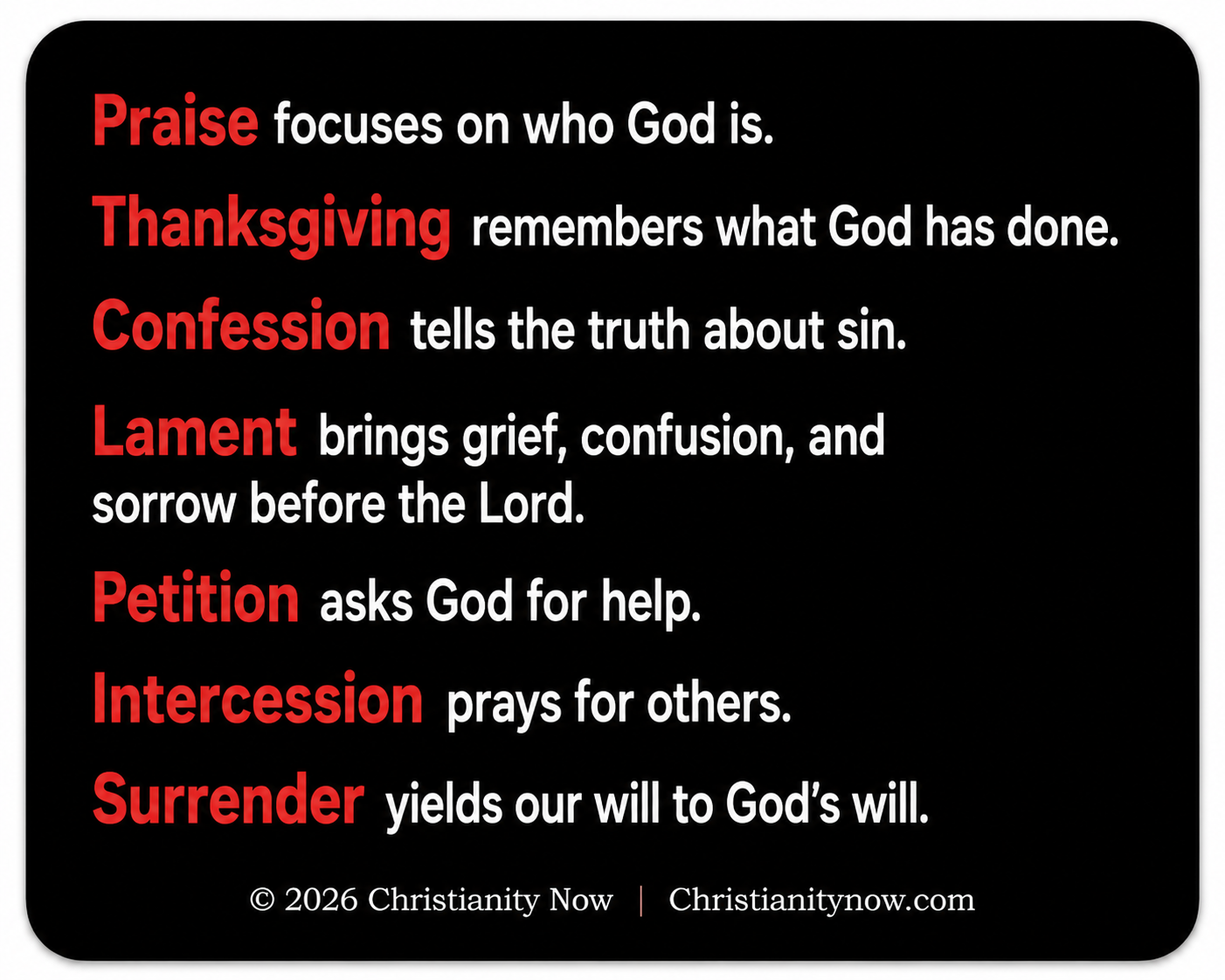
A mature prayer life does not require every prayer to include every category. Over time, however, Scripture teaches believers to bring their whole lives before God. The Psalms are especially helpful because they show the emotional honesty of prayer. Fear, anger, sorrow, gratitude, repentance, hope, and worship all appear there.
God is not honored by pretending. He invites truthfulness.
What Prayer Does in our Lives
Prayer deepens dependence on God. When life is easy, prayer keeps us from self-reliance. During suffering, prayer keeps us from despair. In confusion, prayer seeks wisdom. Under temptation, prayer asks for strength. After sin, prayer returns us to mercy.
The apostle Paul tells believers to “pray without ceasing” in 1 Thessalonians 5:17. That does not mean Christians must speak words every moment of the day. Instead, our lives should become increasingly open toward God. Prayer becomes a posture, not only an event.
Morning prayer may begin the day in surrender. Brief prayers throughout the day can turn anxiety into trust. Evening prayer can help us confess, give thanks, and rest. Corporate prayer reminds us we belong to the body of Christ, not merely to private spirituality.
Over time, prayer forms us into people who remember God more quickly, trust Him more deeply, and obey Him more willingly.
What If Prayer Feels Hard?
Many faithful Christians struggle to pray. Distraction, fatigue, disappointment, grief, doubt, and busyness can make prayer feel difficult. Silence from God can be painful. Unanswered prayer can create confusion. Repeated failures can leave us feeling ashamed.
Scripture does not ignore those struggles. Romans 8 teaches that the Spirit helps us in our weakness when we do not know how to pray as we ought. That means weakness is not the end of prayer. Sometimes weakness is where prayer becomes most honest.
A person who can only whisper, “Lord, help me,” is still praying. Someone who sits quietly before God with tears is not failing. Anyone who returns after months of prayerlessness is not rejected. In Christ, the door remains open.
How to Begin Praying
A simple way to begin is with honesty. Tell God where you are. Praise Him for one truth about His character. Confess what needs to be confessed. Ask for what you need. Pray for someone else. End by surrendering the day to Him.
The words do not have to be complicated. A prayer might begin, “Father, I am tired, and I need Your wisdom.” Another may sound like, “Lord, forgive me for the way I spoke today.” Someone else may pray, “Help me trust You with what I cannot control.”
Scripture can also guide prayer. Praying through a Psalm, the Lord’s Prayer, or one of Paul’s prayers can give language when our own words feel thin.
Prayer grows by practice. Not every prayer will feel powerful. Not every moment will feel deeply spiritual. Faithfulness often looks ordinary before it feels profound.
Why Prayer Still Matters
In a noisy world, prayer reminds believers that God is not distant. In a self-sufficient culture, prayer teaches dependence. In anxious times, prayer brings fear before the One who rules over all things. In seasons of sin, prayer leads us back to mercy. In moments of gratitude, prayer turns gifts into worship.
Christian prayer is not magic. It is not a technique for controlling outcomes. It is not a substitute for obedience. Prayer is the living conversation of faith, made possible because Jesus Christ has opened the way to the Father.
The deepest gift of prayer is not merely that we receive answers. The deeper gift is that we receive God Himself.
Closing Prayer
Father, teach us to pray with honesty, reverence, faith, and surrender. Help us come to You without pretending, trust You without fear, and listen for Your Word with humble hearts. Let prayer reshape our desires, strengthen our obedience, and draw us closer to You each day. In Jesus’ name, amen.