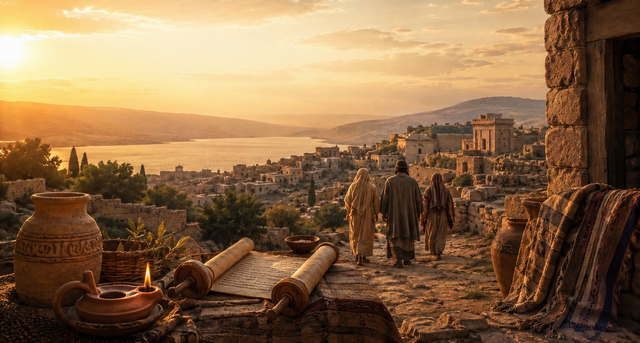


In the Christian imagination, the Jordan River is not simply a body of water. It is a threshold. Israel crossed it into promise. Elijah struck it and parted it. And at its banks, Jesus stepped into the current to be baptized by John. The Gospel writers treat the scene with a kind of quiet gravity that gives pause—the water, the Spirit, the Father’s voice. A beginning that feels like an unveiling.
Jordan is betting that, in a restless age, that beginning still draws people.
The country has been openly accelerating plans to welcome an expected surge of pilgrims for what it is calling a major Christian milestone, the 2,000th anniversary of Christ’s baptism, anticipated in 2030. The anniversary matters not only because of the baptism itself, but because, for many Christians, it marks the start of Jesus’ public ministry—the moment when private preparation turns into public proclamation.
That detail answers a question many believers have been asking: Is the 2,000-year anniversary about Jesus’ ministry or His death and resurrection? In the emerging global “jubilee cycle,” it’s both—but not at the same time. 2030 is widely being framed around the baptism (and thus the beginning of ministry), while 2033 is being discussed in many Christian networks as a major commemoration of the crucifixion and resurrection.
Jordan’s focus—at least right now—is firmly on the river.
A holy site with an unusually practical strategy
Bethany Beyond the Jordan—known in Arabic as Al-Maghtas—sits on the eastern bank of the Jordan River and has long been venerated as the traditional baptism site. In 2015, UNESCO inscribed “Bethany Beyond the Jordan (Al-Maghtas)” as a World Heritage Site, recognizing its archaeological and religious significance.
Jordan’s approach to 2030 is both devotional and logistical. The government and affiliated development bodies have been laying out plans that look like a hybrid of pilgrimage infrastructure and national economic strategy where new visitor facilities, expanded access, and larger-scale development is meant to increase capacity for international travel.
Back in 2022, Jordan publicly launched what outlets described as a $100 million master plan to develop the baptism area with the goal of attracting large numbers of Christian pilgrims for 2030. In more recent reporting, that ambition has only grown. The Jerusalem Post described Jordan planning a much larger tourism project—reported as €300 million—linked explicitly to the goal of marking the 2,000-year milestone at the baptism site.
The government’s pitch is straightforward: Jordan wants to position itself not as a side-trip to the Holy Land, but as a central destination in the next decade of Christian commemoration.
Why 2030, specifically?
Chronology is complicated. Historians and biblical scholars debate the year of Jesus’ birth, the length of His ministry, and the year of the crucifixion. A “2,000-year anniversary” is not a peer-reviewed conclusion so much as a commemorative decision.
Still, many church and pilgrimage leaders have embraced 2030 as a meaningful marker for the two millennia since the baptism of Christ, followed by additional commemorations tied to the latter part of His ministry and the events of Holy Week leading toward 2033. Jordan’s own tourism-facing materials describe 2030 as the 2,000th anniversary of Christ’s baptism and connect it to a broader cycle of remembrance.
A recent Catholic media report put it plainly saying that 2030 is being discussed as a jubilee linked to the baptism, “ahead of” the larger 2033 commemoration tied to Christ’s passion, death, and resurrection.
That sequencing is one reason Jordan is moving now. A milestone that will draw global attention tends to pull planning forward by years—especially when travel, security, infrastructure, and diplomacy are involved.
A pilgrimage surge in a post-pilgrimage age
It’s easy to assume pilgrimage is a medieval instinct—something modern Christians outgrow. Yet the last decade has complicated that assumption. Even as religious affiliation declines across much of the West, a countercurrent is emerging that suggests people are drawn to faith you can feel and inhabit such as older disciplines, historic liturgy, sacred places, and the kind of history you can see and touch.
Jordan’s preparations suggest that leaders believe those instincts will intensify, not diminish, as 2030 approaches.
Some of the planned projects are designed to make the baptism site more accessible and immersive. Multiple reports describe plans that include recreating a first-century style village or building new interpretive spaces meant to help pilgrims visualize biblical life.
The logic is not hard to see. The modern believer lives in a world of screens and speed. Pilgrimage offers something slower—geography as theology, history as witness, water as sacrament-sign.
The spiritual meaning beneath the infrastructure
For Christians, the baptism of Jesus has never been just a historical curiosity. It is a theological turning point.
In the Gospels, it’s the public beginning of everything—the Spirit descending, the Father’s voice affirming Him, and Jesus stepping openly into solidarity with the people He came to save. In the Jordan, Jesus steps into the waters of repentance not because He needs cleansing, but because He is identifying Himself with sinners.
That’s one reason the commemoration carries weight beyond tourism. The baptism is not just “where Jesus started preaching.” It is where the story of redemption begins to move toward the cross with public momentum.
And that, in turn, is why many Christian leaders speak of 2030 and 2033 together—baptism leading to Calvary, inauguration leading to atonement, water leading to blood.
The World Council of Churches, for example, has noted that 2033 is widely being discussed as a major Christian anniversary connected to Christ’s crucifixion, resurrection, and the early church’s birth—an idea that has already prompted interdenominational planning conversations.
Jordan’s focus on 2030 makes sense within that broader storyline—a way of marking the public beginning of Jesus’ ministry before the later commemorations turn toward its climax.
Jordan, for its part, is preparing as if people will come—not only as tourists, but as pilgrims. The river is still there. The desert is still there. The story is still there.
The question is what modern Christians will bring with them—nostalgia of hope, curiosity, faith or a hunger to be reminded that Jesus did not enter history as an idea, but as a person who stepped into real water, in a real place, to begin a ministry that would end in a cross and rise into hope.