



There is a question many people are asking quietly, even if they are too tired, wounded, or just to angry to say it out loud.
Is this really Christianity?
They have watched pastors fall, ministries collapse, churches protect reputations of victims and leaders speak the language of holiness while living in hidden sin. They have seen financial greed, spiritual authority used as control, political loyalty baptized as faithfulness, and vulnerable people told to be quiet for the sake of “unity.” For some, the disappointment is deeply personal. They trusted the church. They believed a leader. They served faithfully. And when the truth came out, something inside them broke.
That breaking point is real.
Across American religious life, scandals and institutional failures have contributed to deep distrust. PRRI found that 31 percent of religiously unaffiliated Americans say clergy sexual abuse scandals are a reason they no longer identify with their childhood religion, up from 19 percent in 2016. Former Catholics are especially likely to cite abuse scandals, but the wound reaches beyond one denomination. Pew Research Center has also found that among Americans raised Catholic who no longer identify as Catholic, 8 percent name abuse scandals as the main reason they left.
This is not simply a public-relations problem for the church. It is a spiritual crisis.
And yet Scripture is not surprised by it.
Jesus warned, “Beware of false prophets, who come to you in sheep’s clothing but inwardly are ravenous wolves” (Matthew 7:15). Paul warned the Ephesian elders that “fierce wolves” would come in among them, not sparing the flock (Acts 20:29). Peter warned that false teachers would exploit people with deceptive words (2 Peter 2:1–3). Ezekiel condemned shepherds who fed themselves instead of the sheep (Ezekiel 34). In other words, the Bible never asks believers to pretend that everyone who carries a Bible, stands in a pulpit, leads a ministry, or uses Christian language belongs to Christ in character.
The wolves were always part of the warning.
Exposure Is Painful, But It Can Be Mercy
When corrupt leaders are exposed, it can feel like the destruction of faith. But biblically, exposure is often an act of mercy.
Hidden sin grows in darkness. Abuse survives when people are too afraid to speak. Manipulation thrives when churches confuse silence with peace. False teaching spreads when charisma is mistaken for anointing. Corruption deepens when institutions protect their image more than they protect the wounded.
So when truth comes into the light, it hurts. It disrupts. It embarrasses. It grieves. But it can also rescue.
The 2022 independent Guidepost Solutions report on the Southern Baptist Convention’s Executive Committee described years in which survivors and concerned Southern Baptists reported abuse allegations only to be met with resistance, stonewalling, and hostility. The report said some leaders were focused on avoiding liability while survivors were “ignored, disbelieved,” and in some cases left without warning to churches where convicted abusers continued in ministry.
That kind of exposure is devastating. But the devastation did not begin when the report was released. It began when people were harmed, ignored, intimidated, or left unprotected. The exposure simply forced the hidden thing to be seen.
Christians should understand this clearly. Exposure is not the enemy of the church. Sin is. Abuse is. Hypocrisy is. Cowardice is. The love of power is. The fear of man is. The refusal to repent is.
When God exposes what is false, He is not destroying His church. He is purifying it.
The Failure of Leaders Is Not the Failure of Christ
For many wounded believers, the hardest part is separating Jesus from the people who misrepresented Him.
That is understandable and partly because many people meet Christianity first through Christians. They encounter the church before they understand doctrine. They experience a pastor’s tone before they understand the character of Christ. They see how leaders handle money, power, women, children, race, politics, sexuality, and suffering. And when those leaders fail, the failure feels like evidence against the faith itself.
But the sins of false shepherds do not disprove Jesus. They confirm His warnings.
Jesus did not flatter religious hypocrisy. He confronted it. He called out leaders who loved honor, devoured widows’ houses, placed heavy burdens on others, and cleaned the outside of the cup while the inside was full of greed and self-indulgence. He did not excuse spiritual abuse because it came wrapped in religious language. He exposed it.
That matters for anyone asking, “How can I stay Christian after what I have seen?”
The answer is not to pretend that these issues don't matter. The answer is to realize that Jesus hated it before you did.
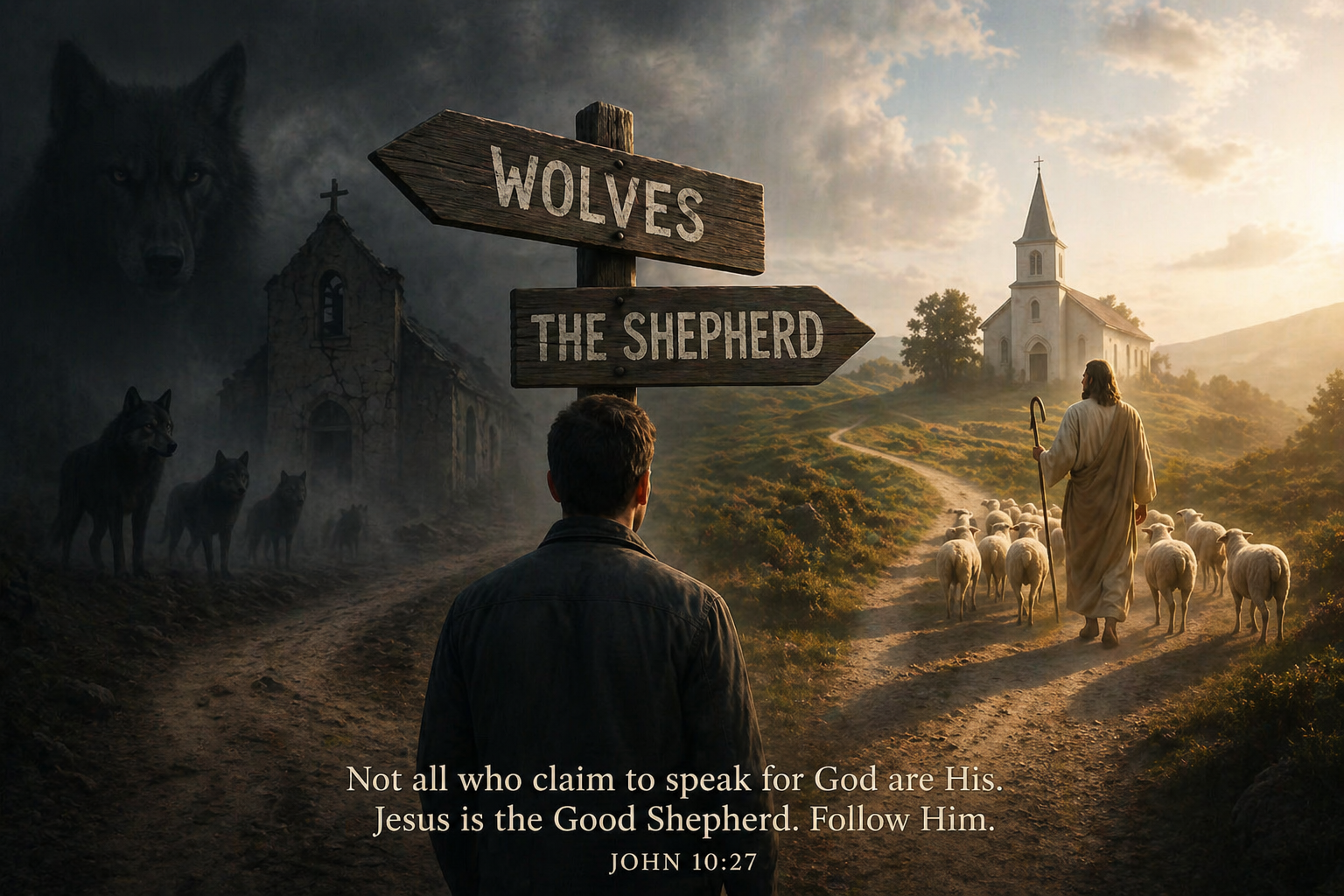
Christ is not the wolf. He is the Shepherd. And as Christians we have to remember, we should not put our trust in man, our trust and faith belongs to Christ alone.
Walking Away May Feel Like Safety, But It Is Not Always Freedom
Some people leave church because they need to get away from danger. That can be wise and necessary depending on the situation and the person. If a church is abusive, manipulative, unsafe, secretive, or unrepentant, leaving may be necessary. No one should be pressured to remain in a harmful spiritual environment. Victims should report abuse to civil authorities, seek safety, and receive care that does not depend on protecting the institution.
But leaving an abusive church is not the same as leaving Jesus.
This is where many people get trapped. They assume the only choices are to stay and be crushed or walk away from faith entirely. But there is another path. You can reject abusive leadership without rejecting Christ. You can leave a corrupt church without leaving the body of Christ. You can grieve betrayal without surrendering your soul to bitterness. You can stop trusting a wolf without deciding there is no Shepherd.
That distinction matters.
Walking away from the faith may feel like taking back control. But if the faith you are walking away from is a distorted version built by wounded people, manipulative leaders, and corrupted systems, then perhaps the deeper invitation is not to abandon Christianity, but to rediscover Christ beneath the wreckage.
What the Exposure Is Teaching Us
The exposure of wolves is forcing the church to recover discernment.
For too long, many Christians have confused visibility with fruit. We have assumed that large platforms equal spiritual authority, that full rooms equal God’s favor, that confidence equals wisdom, that gifted preaching equals godly character, and that loyalty to a leader equals loyalty to Christ.
But Jesus said we would know them by their fruit.
But first we have to realize that fruit is not stage presence. Fruit is not branding. Fruit is not book sales, viral clips, political access, or emotional altar calls. Fruit is character. Humility. Repentance. Truthfulness. Gentleness. Self-control. Faithfulness. Protection of the vulnerable. Willingness to be corrected. A life that looks increasingly like Jesus when no one is applauding.
The church is also learning that accountability cannot be optional. Spiritual leaders are not above correction. Ministries are not above investigation. Churches are not above the law. Forgiveness does not mean removing consequences. Unity does not mean hiding truth. Grace does not mean giving predators access to more sheep.
A church that refuses accountability is not defending the Gospel. It is defending itself.
Why Faith Is Still Worth Holding onto
The Christian faith is not worth holding onto because believers have always reflected it faithfully. Too often, we have not.
It is worth holding because Jesus is the true.
He is true when His people are faithful and when His people fail. He is true when churches are healthy and when churches are exposed. He is true when leaders repent and when leaders harden their hearts. The credibility of Christ does not rest on the sinlessness of His followers. If it did, Christianity would have collapsed in the first century.
Christianity is worth holding onto because Jesus is our one true example. He lived a sinless life, died on the cross, rose on the third day, and now sits at the right hand of God. He gave His life for ours, and it is His Word we follow—not man’s.
So what we have to remember is that our faith does not rest on a pastor, Bible teacher, Christian leader, friend, ministry, or institution. It rests on Christ. His example is the one we cling to, especially when others fail to reflect Him faithfully.
The Gospel has always been honest about human sin. That includes sin inside religious communities. It tells the truth about wolves, hypocrites, false teachers, abusive shepherds, and people who use God’s name for their own power. But it also tells us that Jesus lays down His life for the sheep.
That is the difference.
The wolf consumes the sheep.
The hireling abandons the sheep.
The false shepherd uses the sheep.
But Christ dies for the sheep.
So if you are asking whether this is really what Christianity is, the answer is no. Corruption, abuse, hypocrisy, spiritual manipulation, political idolatry and covering sin to protect a ministry is not Christianity.
Christianity is Christ.
And Christ is still calling His people to repentance, truth, healing, holiness, and courage.
Do Not Leave the Shepherd Because of the Wolves
The exposure of wolves is painful, but it is also clarifying something. It reminds us that discernment, character, truth, accountability, vulnerability and the reputation of Jesus matters more than the reputation of any pastor, church, denomination, platform, or movement.
For those who have been hurt, the next faithful step may not be quick. It may involve counseling, rest, lament, distance from unsafe people, and time to learn how to trust again. God is not impatient with the wounded.
But do not let wolves have the final word over your faith.
They may have distorted the Gospel, but they did not die for you.
They may have misused Scripture, but they did not write it.
They may have wounded you in the name of God, but they are not God.
Jesus is still the Good Shepherd. And even now, in all this exposure, He is still calling His sheep away from the voice of strangers and back to Himself.