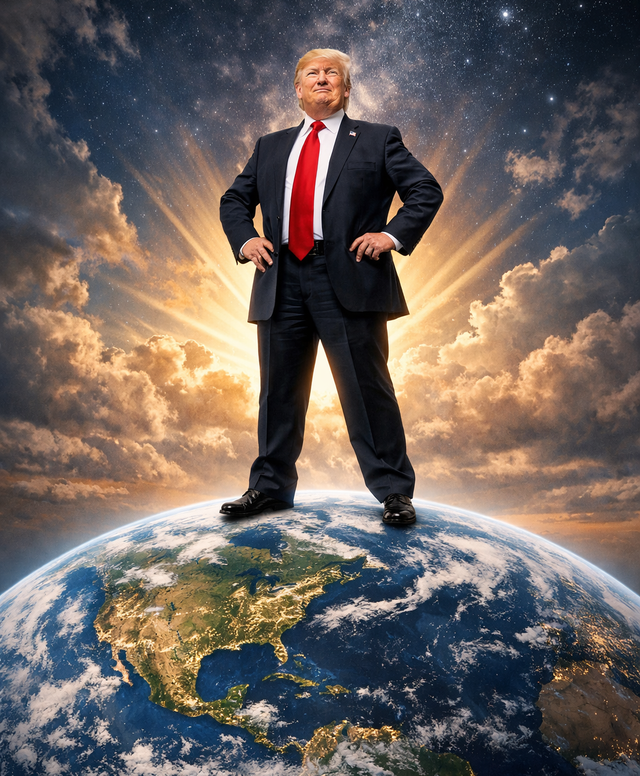


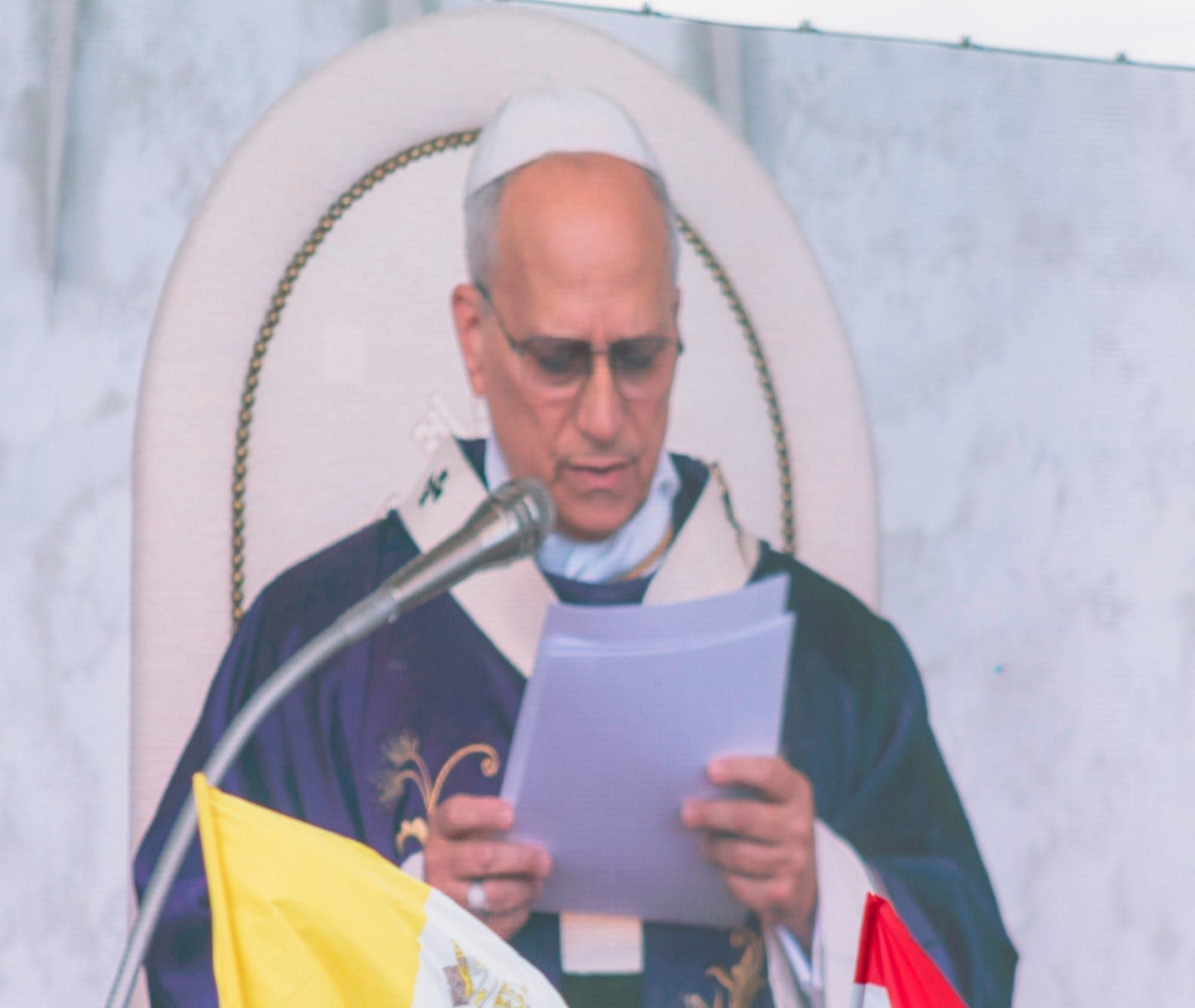
The President of the United States, Donald Trump has criticized Pope Leo XIV for speaking the message of the gospel the way God intended it to be spoken, in calls for peace and the safety for all. The Pope is calling for leaders to have negotiations so that the shedding of innocent blood ends. So why is this such a huge problem for President Donald Trump?
Pope Leo XIV has been careful about how he frames his message. He has not described himself as a political rival to Donald Trump, and he has explicitly said he does not want to get drawn into a personal debate. Instead, he has said that his appeal is rooted in “the message of the Gospel,” that the Gospel is being “abused,” and that he intends to keep speaking out against war, promoting peace, dialogue, and “just solutions” because “too many innocent people are being killed.” Pope Leo has presented his position on these matters as pastoral and moral rather than partisan.
That distinction matters because Trump does not appear to be hearing the pope’s message as a general Christian appeal to protect life and pursue peace. He appears to be hearing it as a direct challenge to himself. Reuters reported that Trump called Leo “weak on crime” and “terrible for Foreign Policy,” while AP reported that Trump later said, “He was very much against what I’m doing with regard to Iran,” making clear that he understood the pope’s criticism as a response to his own actions.
That is what makes this more than another clash between a pope and a president. It is not simply a dispute over tone or diplomacy. It is a collision between two different moral vocabularies. Leo is speaking in the language of the Gospel, where peace is not weakness, innocent life is not expendable, and public power is measured by whether it restrains destruction rather than expands it. Trump is responding in the language of personal offense and political power, where criticism is treated less as moral witness than as opposition. The pope’s message is universal. The president’s response is unmistakably personal.
Pope Leo has been moving toward this confrontation for days. AP reported that he called Trump’s threat to destroy Iranian civilization “truly unacceptable” and said attacks on civilian infrastructure violate international law. He urged people of goodwill to contact their political leaders and representatives and press them to reject war and work for peace. A few days earlier, AP also reported that Leo denounced the “delusion of omnipotence” he said was fueling the U.S.-Israeli war in Iran and demanded that political leaders stop and negotiate peace.
Trump’s answer was not to engage the substance of that moral warning. It was to attack the man who delivered it. On his Truth Social platform, Trump publicly criticized Leo as “terrible,” and he refused to apologize, saying the pope was “very much against what I’m doing with regard to Iran.” That is revealing. Leo’s argument was about war, innocent life, and the Christian obligation to pursue peace. Trump heard it as a personal rebuke and responded accordingly.
And yet the pope has kept insisting that this is not about personal rivalry. The Pope's message is a broader Christian appeal about war, conscience, and obedience to God.
That is where Scripture clarifies the moment. When Leo says his message is the Gospel, one of the clearest verses beneath his witness is Matthew 5:9 — “Blessed are the peacemakers, for they shall be called children of God.” And when he continues speaking despite political hostility, Acts 5:29 also comes to mind — “We must obey God rather than men.” The pope’s position, at least as he has described it, is not that he is trying to run foreign policy from Rome. It is that when innocent people are dying and war is being justified in the language of necessity and strength, the Church has an obligation to say there is a better way.
This is also why the clash has exposed a contradiction many Christians have been reluctant to face. A great deal of American religious rhetoric still speaks the language of being pro-life, defending Christian civilization, and protecting moral order. But Leo has been pressing on whether those claims can be taken seriously if they coexist with support for war, threats against civilian infrastructure, and indifference to innocent suffering. The Pope has made the human cost of the war impossible to ignore, condemning attacks on civilians as both unlawful and morally indefensible. He is not changing the subject. He is reminding the Church that its moral witness cannot stop where political loyalties begin.
That makes this a test not only for Trump, but for the wider church. Will Christians hear the pope’s call as the Gospel, or dismiss it as politics because it inconveniences the priorities of power? Reuters reported that Archbishop Paul Coakley answered that question with unusual directness, saying the pope is not Trump’s rival and not a politician, but “the Vicar of Christ who speaks from the truth of the Gospel and for the care of souls.” That line cuts through the confusion. The pope is not campaigning. He is bearing witness.
The deeper clash, then, is not finally between Rome and Washington. It is between two visions of power. One sees power as the ability to threaten, dominate, and answer criticism with force. The other sees power as an obligation to protect life, tell the truth, and make peace. One hears moral warning and strikes back. The other sees bloodshed and insists that someone must speak.
For Christians, the dividing line should be clear enough. The Gospel does not exist to bless the instincts of presidents. Presidents are judged by the Gospel.