

WASHINGTON — Only 5 percent of white evangelical Protestants say President Donald Trump is “very religious,” according to a new Pew Research Center survey that also found many of his strongest religious supporters still believe he stands up for their beliefs.
The findings highlight a long-running distinction in Trump’s relationship with white evangelicals where many do not appear to view him primarily as a model of personal piety, but as a political figure who advances or protects causes they care about.
According to Pew Research Center, 70 percent of U.S. adults say Trump is “not too” or “not at all” religious, while 24 percent say he is “somewhat religious” and 5 percent say he is “very religious.” The April survey marks an 8-point increase since fall 2024 in the share of Americans who say Trump is not too or not at all religious.
Among white evangelical Protestants, 51 percent say Trump is not too or not at all religious. Another 44 percent describe him as somewhat religious, while 5 percent say he is very religious. Pew noted that even among Trump’s strongest supporters, relatively few people describe him as very religious.
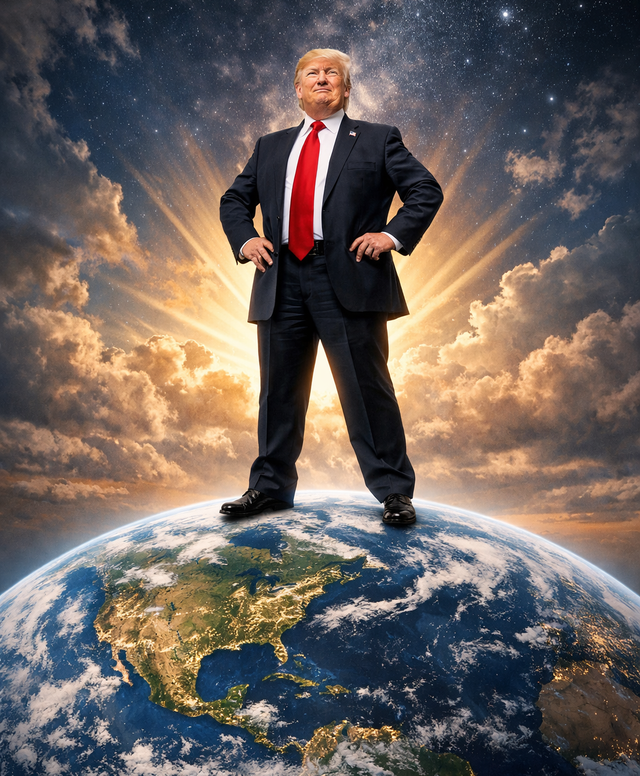
The survey was conducted April 6–12 among 3,592 U.S. adults and has an overall margin of error of plus or minus 1.9 percentage points. Pew said the survey took place shortly before Trump criticized Pope Leo XIV and posted, then deleted, a social media image depicting himself in a Jesus-like manner.
The report also found a sharp partisan divide. Democrats and Democratic-leaning independents are far more likely than Republicans and Republican leaners to say Trump is not too or not at all religious, 89 percent compared with 49 percent. Republicans, by contrast, are more likely than Democrats to describe him as somewhat religious, 42 percent compared with 8 percent.
Still, perceptions of Trump’s personal religiosity do not fully explain his standing among conservative religious voters. Pew found that two-thirds of white evangelicals say Trump stands up at least somewhat for people with religious beliefs similar to theirs. That includes 49 percent who say he stands up for them “a great deal” or “quite a bit,” and 18 percent who say he does so “some.”
Across all U.S. adults, however, only 22 percent say Trump stands up a great deal or quite a bit for people with religious beliefs similar to theirs. Another 14 percent say he stands up for them somewhat, while 47 percent say he does so a little or not at all.
The findings show the complicated relationship between religion, identity, and political power in American public life. For many white evangelicals, Trump’s appeal appears less connected to how religious they believe he is personally and more connected to whether they believe he defends their interests in law, policy, courts, religious liberty, education, abortion, and cultural debates.
For churches and Christian leaders, the numbers raise a familiar but important question about whether believers evaluate political leaders by character, policy, religious identity, or perceived protection. Pew’s survey show that many Americans make a distinction between seeing a president as religious and seeing him as useful to their religious community.
That distinction may help explain why Trump continues to hold strong support among many white evangelicals even as few describe him as very religious. It also underscores the broader tension facing American Christianity in a polarized age, where political alignment can quietly become a substitute for spiritual discernment.