



When I was a child, I often imagined a tall, glowing angel standing at the foot of my bed, sword drawn, ready to strike down anything that dared to enter the room and disturb my sleep. My grandmother used to say, “You have a guardian angel, honey. God’s has someone watching over you.” It was comforting. But as I got older, I began to wonder—is that actually in the Bible? Is the idea of a personal guardian angel biblical, or is it something we’ve created out of a mix of folklore, Hallmark cards, and well-meaning encouragement?
This question has followed me through different seasons of faith. In moments of fear, I’ve longed for visible reassurance that God was protecting me. In times of danger or near-misses, I’ve wondered if an angel stepped in. And when I pray for my children, I find myself asking God to “send angels to surround them”—but is that just a poetic wish, or something I can confidently anchor in Scripture?
And while Scripture may not provide a detailed roster of guardian angels assigned to each believer, many Christians have experienced moments that defy logic—situations where they were protected, comforted, or guided in ways they can only describe as supernatural. These aren’t just fanciful stories or sentimental fables. They are heartfelt, personal accounts from people who genuinely believe they encountered the unseen hand of God—sometimes through an angel.
One woman recounted a time when her car stalled late at night on a lonely stretch of highway. With no cell service and no one around, she sat in the dark and prayed, desperate and afraid. Moments later, an older man in a pickup truck appeared seemingly out of nowhere. He offered help, looked under the hood, and without doing anything she could see, got the car started. She turned to thank him, but both he and the truck had vanished. The road was empty. No engine sound. No taillights. Just silence. She’s convinced God sent an angel in her time of need.
A soldier shared a story that still brings tears to his eyes. During a firefight overseas, he ducked behind a crumbling wall as bullets whizzed by. After the battle, he noticed holes in his uniform, through his sleeves and vest, but not a single wound on his body. A fellow soldier later told him he saw a tall figure standing behind him during the chaos, almost like a shield. The soldier, who hadn’t considered faith seriously before that moment, later gave his life to Christ. He believes with every fiber of his being that an angel stood between him and death.
Then there was a little girl, a missionary’s daughter, who wandered too close to a dangerous river in a remote village. When her frantic parents found her sitting calmly by the edge of the water, they asked why she hadn’t moved. She smiled and said, “The tall man in white held my hand and told me to stay here until you came.” She was five years old. She had never been taught about angels. But her parents believe one was sent that day to guard their child from harm.
Stories like these don’t replace Scripture but they do echo it. They resonate with the heart of a God who commands His angels concerning us. A God who sees, protects, and intervenes. A God who, in His mercy, sometimes lets us glimpse just how deeply we are held even when we thought we were alone.
I’ll never forget what happened to me in 2021. I was driving through a quiet suburban neighborhood, just following my son to the dealership for a routine oil change. Nothing about that night felt unusual—until everything changed in an instant. Out of nowhere, I was hit head-on by a drunk driver. He was flying down the road at what police estimated to be 70 miles per hour—in a 35 MPH zone. I didn’t even see him coming. One second, I was driving, and the next, my world erupted. The impact, the deafening sound, the airbag—it all came so fast, in the blink of an eye—literally! But somehow, in the middle of the chaos, I remember spinning backward. And though everything was happening at lightning speed, the spinning felt slow—almost suspended, like time was unraveling in slow motion just for me.
My son, who was ahead of me, saw it all. To him, everything happened in real time—sudden, brutally fast. But as soon as my car came to a halt, something strange happened. Two men appeared. One came from a nearby truck. The other seemed to have been walking on the street. They approached quickly, but calmly. They didn’t panic. They didn’t shout. My son said they wanted to make sure my car didn’t catch fire. Fortunately for me, it exploded after the fireman cut me out of the car. These men comforted my son, they came to my side, and they even checked on the driver who hit me. They were steady. Present. Kind. Reassuring.
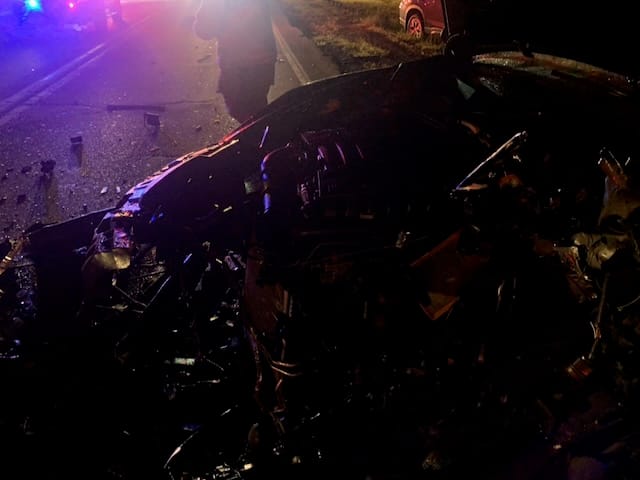
And then, just as quickly as they had come—they were gone. The police arrived within a minute or so, but by then the two men had vanished. Neither I nor my son remembers where they went or how they left. No one mentioned their names. I never saw either of them again. The fire department chief said that was the worst accident he had seen in his 28-year career, and he most certainly didn’t expect me to be alive nor survive the impact when he arrived on the scene of the accident.
To this day, I don’t remember their faces. I don’t remember their voices. I only remember their presence. And I believe they were sent by God for that very moment.
Scripture tells us in Hebrews 13:2, “Do not forget to show hospitality to strangers, for by so doing some have entertained angels without knowing it.” I’ve always believed that verse was true—but now I believe I’ve lived it. In the middle of trauma, in the middle of impact, when fear and pain could have easily overwhelmed us, God sent help. Whether they were angels in disguise or humans moved by the Spirit, I’ll never know for certain this side of heaven. But what I do know is that they were there when we needed comfort, peace, and divine reassurance.
And that’s the beauty of our God. He sees. He responds. Sometimes through the miraculous. Sometimes through the quiet arrival of strangers. And sometimes—through angels we never knew we met.
According to Scripture, angels are spiritual beings created by God to serve His purposes. They are not glorified humans, nor are they to be worshipped or prayed to. They are described as messengers, warriors, worshippers, and sometimes protectors. Angels are powerful, often fearsome, and almost always appear with the same instruction: “Do not be afraid.” Their primary role is to carry out God’s will. And while some angels are named—like Michael and Gabriel, the majority remain unnamed, unseen, and entirely focused on their Creator.
The concept of guardian angels has roots in early Judaism, early church tradition, and even Greco-Roman culture. Over the centuries, many have believed that each person, especially each believer, has a designated angel who watches over them. This belief was reinforced by some writings of the early church fathers and theologians like Augustine and Thomas Aquinas. But tradition, however rich, must always submit to Scripture.
One of the most commonly quoted verses regarding angelic protection is Psalm 91:11–12: “For He will command His angels concerning you to guard you in all your ways. On their hands they will bear you up, lest you strike your foot against a stone.” It’s a beautiful image of divine guardianship, and even Jesus references it when Satan tempts Him in the wilderness. But it’s important to note that the focus of the verse is on God’s command and provision—not the assignment of a personal angel to every individual. It speaks of angelic activity, not angelic ownership.
Jesus’ words in Matthew 18:10 are also frequently cited: “See that you do not despise one of these little ones. For I tell you that their angels in heaven always see the face of my Father in heaven.” This statement implies that there are angels closely connected to children—possibly even assigned to them in some way. While it doesn’t definitively say each child has one guardian angel, it strongly suggests that God appoints heavenly agents to watch over the most vulnerable.
Then there’s that moment in Acts 12 when Peter is miraculously freed from prison. As he knocks at the door of the house church, the people inside too shocked to believe it’s actually him say, “It is his angel!” This comment seems to reflect a common belief among the early Jewish Christians that people had personal angels. But it’s not offered as doctrinal truth. It’s more of an anecdotal remark, reflecting their cultural understanding at the time.
Hebrews 1:14 gives perhaps the clearest theological insight: “Are not all angels ministering spirits sent to serve those who will inherit salvation?” This verse shows that angels are active, sent on assignment to assist and serve believers. It speaks to the reality of angelic involvement in our lives, but it doesn’t confirm whether we each have one specific angel assigned for life. The emphasis is on their service under God’s direction, not their permanent placement with us individually.
Throughout Scripture, we see examples of angels intervening in the lives of individuals. Daniel was protected in the lion’s den by an angel who shut the mouths of the lions. Elisha’s servant was given a vision of angelic armies surrounding them on a battlefield. Peter was escorted out of prison by an angel. Jesus Himself was ministered to by angels in the wilderness and again in Gethsemane. These moments offer a glimpse into a supernatural reality where angels respond to God’s commands to help His people. But they all follow a common pattern which reflects angels move in obedience to God, not on their own initiative.
So do we each have a guardian angel? The Bible doesn’t say clearly. It doesn’t tell us, “You have one angel assigned to you at birth,” nor does it tell us that we don’t. What we do see is a consistent picture of God sending angels at specific times for specific purposes, and that He appoints them to help, guide, or protect His people as He sees fit. It’s not about having one assigned protector—it’s about trusting in the God who commands angels to act on your behalf.
And maybe that’s even better. Because the weight of our hope and security doesn’t rest on whether we’ve got an angel nearby. It rests in the God who never leaves, never sleeps, and never forgets. He is the One who gives His angels charge over us—not as a passive oversight, but as a deeply intentional act of love and protection.
In times when we feel afraid, vulnerable, or exposed, it’s comforting to know that angels are real and that they are involved in the lives of believers. But we must be careful not to let our imagination run further than the Scriptures. We can pray, “God, surround me with Your angels,” but our faith should always remain in Him, not in the unseen messengers He may or may not send.
It’s okay to believe that God uses angels to protect us. It’s okay to ask Him to do so. What matters most is that we keep our eyes on the One who commands them. The greatest security we can have isn’t found in an angel’s wings—it’s found in the unshakable presence of our Savior. He Himself promised, “I am with you always, even to the end of the age.”
There’s something profoundly beautiful about that. God doesn’t outsource our safety because He’s too busy. He is intimately involved in every detail. Sometimes that includes angelic help. Sometimes it’s the quiet presence of His Spirit whispering peace. Either way, it’s all Him.
So when you tuck your child in at night and pray that angels would guard them, you’re not being naïve. You’re expressing a deep, biblically rooted desire for God’s hand to protect what you love. And when you walk through a dark valley and wonder if someone unseen is walking beside you, maybe there is. Maybe God has dispatched someone on your behalf. But even if you can’t see them, you can be sure of this, you are not alone.
You are never abandoned. Never forgotten. You are held by the God who commands the angel armies. Whether He sends one angel or a thousand, He sees you. He guards you. And He loves you more fiercely than you’ll ever know.