


Greece will ban children under the age of 15 from accessing social media beginning January 1, 2027, Prime Minister Kyriakos Mitsotakis announced, citing growing concerns over youth anxiety, sleep problems, screen addiction, and the attention-driven design of major online platforms. The measure is expected to be introduced in Greece’s parliament in mid-2026 and would make social media companies responsible for restricting access or facing penalties under the European Union’s Digital Services Act.
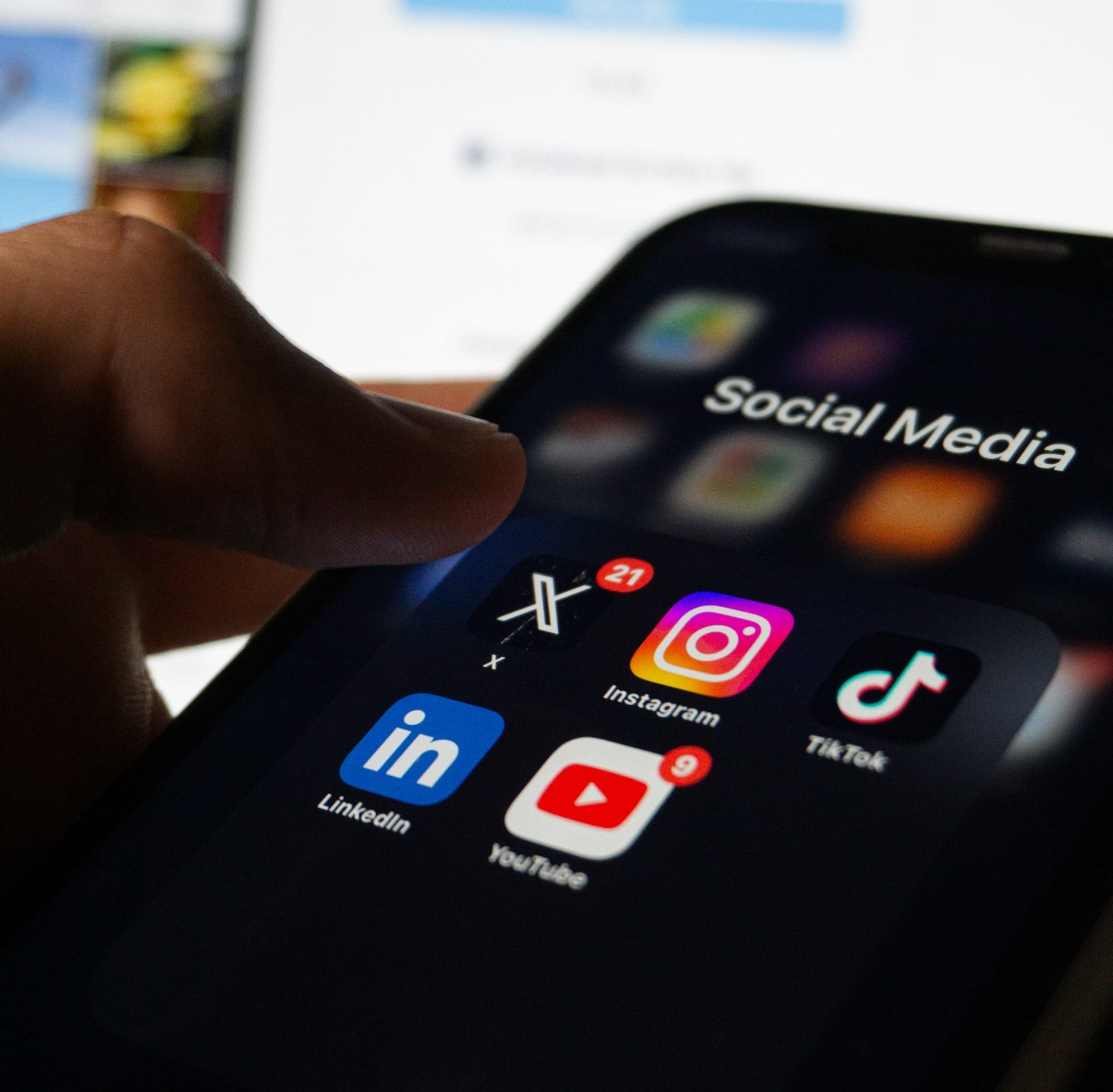
The planned ban would apply to platforms that allow users to create profiles, interact with others, and share content, including services such as Facebook, Instagram, and TikTok. Once enacted, platforms would be expected to reverify users’ ages in Greece and remove or block those under the legal threshold. Violations could be referred to the relevant national regulator or the European Commission, with possible penalties including fines of up to 6 percent of a company’s global turnover, daily fines, or operational restrictions.
Mitsotakis has framed the decision not as an anti-technology measure but as a child-protection policy. In an interview with CNN’s Christiane Amanpour, published by the Greek prime minister’s office, he said social media companies are in the “attention business” and argued that their model should not begin by capturing and monetizing the attention of children and teenagers. He added that Greece is not banning the internet or technology itself, but trying to keep younger children away from products designed to hold their attention for hours.
That distinction matters. The Greek government is not saying children should never use digital tools, learn online, communicate with family, or develop technological literacy. It is saying that certain social media products are no longer neutral places where children simply “connect.” They are commercial systems built to keep users scrolling, watching, comparing, posting, reacting, and returning. For adults, that can be distracting. For children, it can be formative.
Greece’s move follows a growing international wave of restrictions on minors’ access to social media. Australia became the first country to ban social media for children under 16, with penalties for companies that fail to comply, while countries including France, Denmark, Spain, Norway, Malaysia, Indonesia, and Turkey have proposed, passed, or begun developing similar restrictions.
The European conversation is moving quickly. Greece has asked the European Union to adopt a bloc-wide “digital age of majority” at 15 and to create a shared age-verification and enforcement system. Mitsotakis argued that national laws alone may be ineffective because large platforms are regulated through EU-wide frameworks, especially the Digital Services Act.
There is also public support inside Greece. Reuters reported that a February ALCO poll found roughly 80 percent of surveyed Greeks approved of a ban. Greece had already banned mobile phones in schools and created parental-control tools meant to help families manage teenagers’ screen time.
For years, parents were told to manage the problem themselves by setting boundaries, monitoring apps, using parental controls and keep up with the newest platform. But many families have discovered that they are not simply negotiating with their children. They are negotiating against billion-dollar platforms, algorithmic design, peer pressure, hidden accounts, endless scroll, notifications, influencers, and a social world that increasingly punishes the child who logs off.
This is where the commentary must be honest. A ban will not solve everything. Children can find workarounds. Age verification raises privacy concerns. Governments can overreach. Parents can outsource too much moral formation to the state. And not every child’s struggle with anxiety, loneliness, comparison, or sleeplessness can be blamed on a phone.
But the opposite argument is also true. It is not enough to say, “Parents should just do their job,” when the entire digital economy is designed to weaken the family’s ability to do that job. Parents should set limits. Churches should disciple families. Schools should teach digital wisdom. But platforms should not be allowed to build addictive environments for minors and then place all responsibility on exhausted mothers and fathers.
Scripture presents children as gifts to be nurtured. Psalm 127 describes children as a heritage from the Lord. Jesus welcomed children and warned against causing “little ones” to stumble. The biblical vision of childhood is not sentimental, but it is protective. Children are to be formed in truth, love, discipline, wonder, worship, community, and wisdom—not handed over too early to machines built to monetize their attention.
That does not mean Christians should agree with every government restriction without question. There are legitimate concerns about surveillance, digital IDs, privacy, parental authority, and the expansion of state power. A society that gives government too much authority over family life can create new dangers while solving old ones. But neither should Christians pretend the current digital environment is morally neutral.
The question is not simply whether children should be online. The question is who is discipling them there.
Algorithms are not pastors. Influencers are not elders. Comment sections are not communities of formation. Viral trends are not wisdom traditions. And platforms whose revenue depends on attention are not designed to teach children patience, humility, embodied friendship, reverence, self-control, or peace.
The Greek ban is significant because it marks a shift in public thinking. For years, social media was treated as inevitable. Children would use it. Parents would cope. Schools would adjust. Churches would complain. Governments would hold hearings. Platforms would promise better tools. Then the cycle would begin again.
Now, countries are beginning to say no.
They may not all say it perfectly. They may not all enforce it well. But the moral instinct is worth noticing. A child does not need constant access to the performance economy of the internet in order to flourish. A 12-year-old does not need to carry the emotional weight of likes, body comparison, outrage, sexualized content, stranger interaction, and algorithmic manipulation in their pocket. A generation does not become wiser by being trained to never be alone with its own thoughts.
Greece’s policy will be watched closely because enforcement will be difficult. The success or failure of the ban may depend on whether Europe can create a privacy-respecting age-verification system, whether platforms comply in good faith, and whether parents and schools reinforce the law with real-life alternatives.
That last part is essential. Taking social media away from children is not enough if nothing better is given in its place. Children need outdoor play, sports, music, books, friendship, church community, family meals, service, prayer, boredom, imagination, and face-to-face belonging. They need adults to not just remove the phone and computer screens, but show them a world where they can create, care for what God has entrusted to them, bring beauty into ordinary places, and learn the resilience needed to face any situation with wisdom and hope.
Greece may be legislating against social media access for children under 15, but the church has a broader task. Churches need to help families rediscover childhood as something sacred, embodied, relational, and slow. The law may keep a child off a platform. Only wisdom can teach that child how to live.