

On paper, America is still a religious country. The language is everywhere—on bumper stickers, in campaign speeches, in courthouse oaths, in the long habit of ending national grief with prayer. But in practice, the older institutions that once carried religious identity are thinning out. And as they thin, something else is thickening.
Politics is becoming less a way Americans debate the future and more a way Americans decide who they are.
Gallup’s long-running measure of religious membership captured the shift with a blunt milestone: in 2020, only 47% of Americans said they belonged to a church, synagogue, or mosque—down from 70% in 1999, and the first time membership fell below half in Gallup’s eight-decade trend. Pew’s most recent Religious Landscape Study, conducted across 2023–24 and published in 2025, shows a parallel reality: 29% of U.S. adults are now religiously unaffiliated, the “nones” category that has grown markedly since 2007.
What replaces an identity when it no longer comes automatically from congregation, creed, or community?
One answer, increasingly, is that Americans are reaching for political belonging with a religious intensity—treating parties and ideologies not as imperfect instruments of governance but as moral tribes. The proof is not just in voting patterns, but in how Americans describe the stakes. The Listen First Project’s compilation of national polarization research cites AP/NORC findings that 87% of Americans see political polarization as a threat to the country, and that large majorities describe themselves as exhausted by the division.
Exhaustion, in this sense, is a symptom—not of apathy, but of over-identification. Politics has become too close to identity.
When faith retreats, affiliation rushes in
The older American model of identity gave people multiple anchors like local institutions, civic clubs, neighborhood life, extended family, and—most significantly for millions—church. Those anchors didn’t guarantee virtue, but they did offer a stable sense of “we,” one not entirely dependent on the news cycle.
As church affiliation declines, partisan affiliation is increasingly asked to carry the emotional weight of belonging. It provides community (online and off), moral clarity, rituals, villains, heroes, an eschatology of doom or triumph, and an identity that can be displayed with the ease of a yard sign. It also offers something modern life makes scarce: certainty.
But certainty has a cost. When politics becomes identity, disagreement stops being a difference of opinion and becomes a threat to personhood. That’s when civic life begins to resemble spiritual warfare—except without the guardrails of spiritual humility.
PRRI’s 2023 American Values Survey captures how quickly democratic anxiety can turn into permission for extremity. In the survey report, PRRI notes that 38% of Americans agreed with the statement that because the country has “gotten so far off track,” the nation needs a leader willing to “break some rules” to set things right. And PRRI reports that nearly a quarter of Americans—23%—agreed that “true American patriots may have to resort to violence” to save the country, a figure PRRI described as an increase compared with earlier measures.
You don’t reach those numbers if politics is merely about taxes and potholes. You reach them when politics becomes sacred.
The authority question Christians can’t dodge
For Christians, this raises a deeper and older question than “Which policy is best?” It’s the question of authority.
The New Testament doesn’t offer a simplistic script. It offers tension.
Jesus tells his listeners to "render to Caesar what belongs to Caesar and to God what belongs to God" (Mark 12:17), a line that acknowledges civic obligation while refusing to give the state ultimate authority. The apostles, when commanded to stop preaching, answer with a hierarchy of obedience: “We must obey God rather than men” (Acts 5:29). Paul urges respect for governing authorities as part of God’s ordering of society (Romans 13:1–2), without ever suggesting the state deserves worship.
The point is not political withdrawal. It is moral clarity. Christians can participate in public life—and should—but they cannot let political loyalty become the final authority that decides what’s true, what’s good, and who deserves love, peace and safety.
When politics begins to function as the guiding authority—shaping conscience, determining compassion, organizing moral imagination—biblical truth becomes a tool rather than a foundation.
Faith, politics, and the pulpit
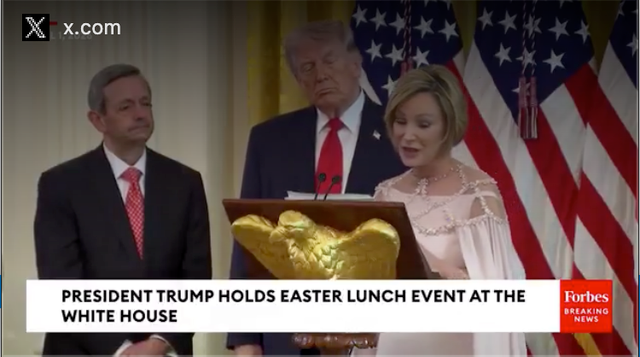
The fear that churches are becoming political machines has been around for years, but the data shows a more complicated picture. A Lifeway Research survey of Protestant pastors in 2024 found that explicit candidate endorsements from the pulpit remain rare: 98% of pastors said they had not publicly endorsed candidates during a church service that year.
But the same report found that 25% of pastors said they had personally endorsed candidates outside of their church role. Even when pulpits stay formally neutral, politics still flows through the church ecosystem—in private conversations, online posts, informal influence, and the subtle discipling power of what gets emphasized or ignored.
Public opinion generally still prefers distance. Pew reported that in a 2022 survey, majorities of both Democrats (84%) and Republicans (70%) said churches should not endorse political candidates. The paradox is that many Americans want churches to avoid campaigning even as political identity increasingly behaves like a substitute religion.
The culture offers evidence of that substitution in symbolic artifacts—products that blend Scripture with national identity so seamlessly that the boundary becomes hard to see. The “God Bless the USA Bible,” for example, is marketed as a King James Bible edition packaged alongside American civic texts such as the Constitution, the Declaration of Independence, the Bill of Rights, and the Pledge of Allegiance. Critics see this as civil religion in hardcover form: faith and nation bound together as if they are equally authoritative. Many pastors have called this blasphemy.
Whether one views such symbolism as harmless patriotism or theological confusion, it points to a reality worth naming. When faith becomes primarily heritage—an identity marker—rather than transformation, it becomes easy to weaponize. Christianity turns from a cross into a flag. The Holy Spirit is not present in a flag, it is present in transformed heart.

The social cost of political religion
The most dramatic cost is violence. When a society begins to treat political opponents as existential threats, escalation becomes easier to justify.
The attack on the U.S. Capitol on January 6, 2021 remains a landmark because it revealed how political devotion can become a form of sacred fervor. The country has since absorbed further shocks. In 2025, conservative activist Charlie Kirk was assassinated during a speech at a university event, prompting federal investigation and national response. That same year, Minnesota House Speaker Emerita Melissa Hortman and her husband were killed, and state Senator John Hoffman and his wife were shot and wounded, in a politically motivated set of attacks described in a federal indictment announcement.
But the more common cost is quieter. It is relational. Polarization fractures families. It divides churches. It turns social media into a tribunal. It makes the command to love one’s neighbor feel optional—and the command to defeat one’s enemies feel righteous.
Jesus’ ethic—“love your neighbor as yourself” (Mark 12:31)—does not fit easily inside modern political identity because modern political identity is built on sorting. It trains people to reserve empathy for their side. It narrows compassion into ideology. It creates an "us against them" mentality that can stoke violence, create division, distort perspectives and eliminate rationality.
Does religion belong in politics?
America’s constitutional design guarantees free exercise of religion and bars an established church, leaving a persistent tension: faith shapes conscience, but the state cannot enforce theology. Americans themselves tend to draw a line between moral engagement and partisan campaigning, which is why most oppose churches endorsing candidates.
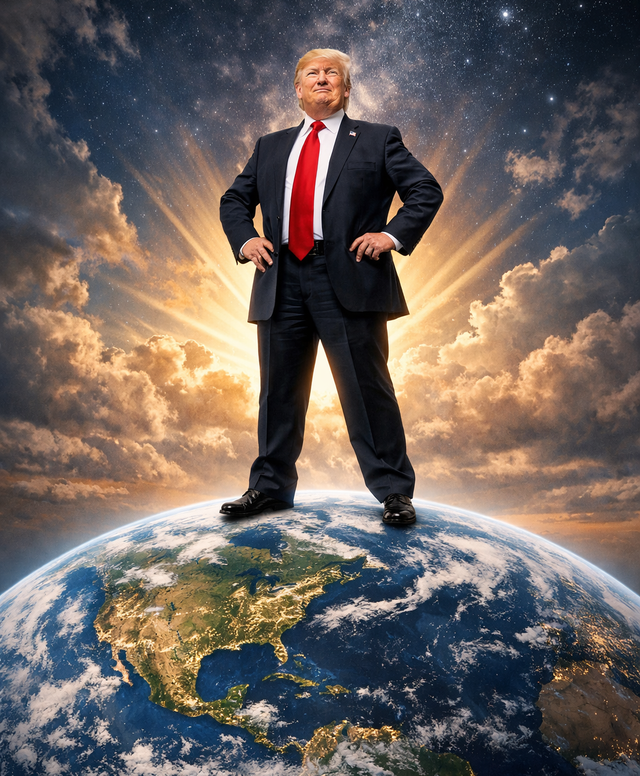
Still, this debate often misses the deeper development: the problem is not only religion entering politics. It is politics becoming religious—taking on the role of ultimate identity, moral certainty, and belonging.
That shift is what changes the temperature. Once politics becomes a sacred identity, compromise becomes heresy. Humility becomes betrayal. Peacemaking becomes weakness.
Would Jesus recognize our allegiances?
The Gospels are careful to show that Jesus refused political capture. He did not align himself with the zealots or the elites. He proclaimed a kingdom “not of this world” (John 18:36)—not because it had nothing to say about the world, but because it does not derive its legitimacy from earthly power.
If Jesus walked into American political life today, it is hard to imagine him starting with party machinery. The pattern of his ministry suggests he would begin in streets and homes, with repentance, mercy, and the kind of love that confounds tribal logic. His instructions to his followers remain stubbornly nonpartisan: "make disciples of all nations" (Matthew 28:19–20), "bless peacemakers" (Matthew 5:9), and "let love be the mark of discipleship" (John 13:35).
These are not soft virtues. They are costly ones. And they are exactly what political religion tends to erase.
The mirror
The question facing American Christians is not simply “Are we involved in politics?” It’s “What is forming us?”
A person can quote Scripture and still be discipled by outrage. A church can sing worship songs and still be organized by fear. And when any party becomes ultimate—when it tells you who to hate, what to excuse, what to deny—biblical truth has been subordinated to tribal loyalty.
Whether America reverses course remains unclear. But the challenge for Christians is clear enough to be uncomfortable: ensure your ultimate allegiance rests not in ideology, not in tribe, not in nation, but in the God you profess to follow.
Because when politics becomes a religion, it doesn’t just distort civic life. It reshapes the soul. And when we stand before God, we'll be judged on what was our first love.