

WASHINGTON — The U.S. Treasury Department announced Thursday that President Donald Trump’s signature will be added to future U.S. paper currency, a move that would mark a historic shift in how American money is designed and recognized.
According to Treasury officials, the change is intended to commemorate the 250th anniversary of U.S. independence, with new bills expected to begin rolling out later this year. Trump’s signature will appear alongside that of Treasury Secretary Scott Bessent, maintaining the long-standing practice of including Treasury leadership on U.S. currency.
If implemented as described, Trump would become the first sitting president to have his name appear on U.S. paper currency.
What the Treasury Announcement Says
The Treasury Department framed the decision as part of a broader effort to honor the nation’s founding milestone.
“There is no more powerful way to recognize the historic achievements of our great country and President Donald J. Trump than U.S. dollar bills bearing his name,” Treasury Secretary Scott Bessent said in a statement.
U.S. Treasurer Brandon Beach also supported the move, calling the addition of Trump’s signature “appropriate” and “well deserved.”
Treasury officials did not release detailed information on which denominations will carry the updated design or how quickly the new bills will enter circulation.
A Break from Longstanding Currency Norms
U.S. paper currency has traditionally carried the signatures of Treasury officials—not the president. While presidents have appeared on currency in portrait form after their deaths, federal law has long prohibited living individuals from appearing on U.S. currency.
According to the U.S. Bureau of Engraving and Printing, current law bars the likeness of living persons from being depicted on currency, though it does not explicitly address the use of presidential signatures.
The Trump administration has argued that adding a signature does not violate the legal prohibition, as it does not involve a portrait or likeness.
Related Efforts to Feature Trump on Currency
The announcement follows recent proposals to place Trump’s image on U.S. coins.
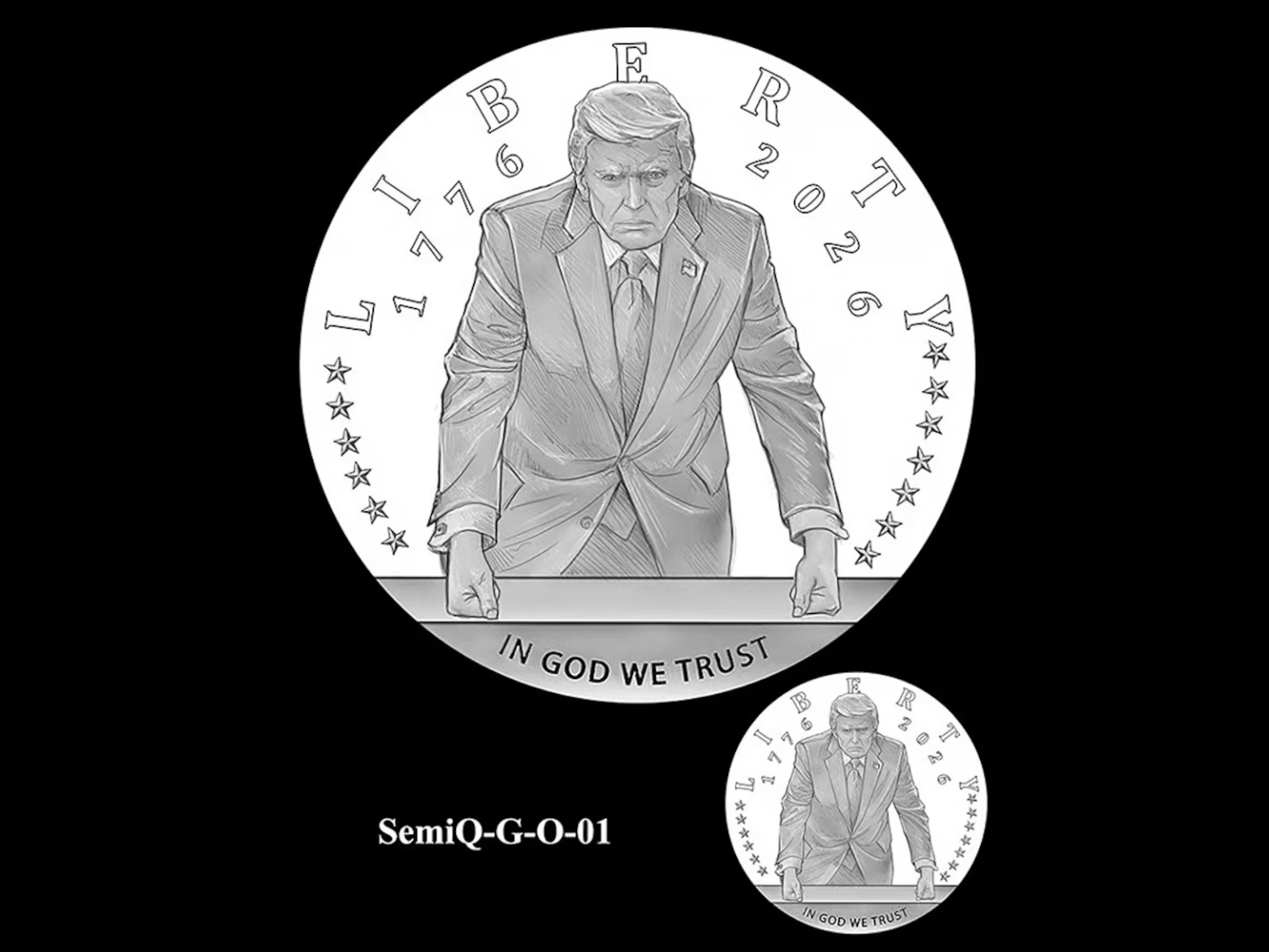
Last week, the U.S. Commission of Fine Arts approved a design for a 24-karat commemorative gold coin featuring Trump’s likeness, intended to mark the nation’s semiquincentennial. Federal officials have also discussed the possibility of a $1 coin featuring Trump, though no final decision has been announced.
Historically, President Calvin Coolidge remains the only sitting president to appear on a U.S. coin during his time in office.
Presidential Branding and National Symbols
The currency announcement comes amid a series of efforts by the Trump administration to associate the president’s name with national institutions and public spaces.
Since the start of his second term, Trump has supported initiatives to rename cultural and federal institutions, including proposals involving the Kennedy Center, the U.S. Institute of Peace, new class of battleships and other government-linked properties. These efforts reflect a broader strategy of embedding presidential identity within national symbols.
Political and Public Reaction
The move is expected to generate debate among lawmakers, historians, and economists.
Supporters argue that the decision reflects a significant historical moment and aligns with the celebration of the country’s 250th anniversary. Critics, however, have raised concerns about precedent and the politicization of national currency, which has traditionally been designed to reflect enduring national figures rather than current political leadership.
Why This Matters
Currency is not just a medium of exchange—it is also a national symbol. The images and names printed on U.S. money carry historical meaning and cultural weight. Changes to those elements often signal broader shifts in how a nation understands its identity and leadership.
If Trump’s signature is added as planned, it could reshape expectations for how future presidents are represented on U.S. currency.