

Last Thursday, March 26, Finland’s Supreme Court handed down the kind of ruling that seems, at first, to belong to one country’s legal system and one politician’s long-running controversy. But because of the nature of this case and its ruling the story refuses to stay local. This story reaches beyond their borders because it presses on a question every democracy must answer sooner or later. What kind of speech will a free society still permit when the speech in question is deeply unpopular?
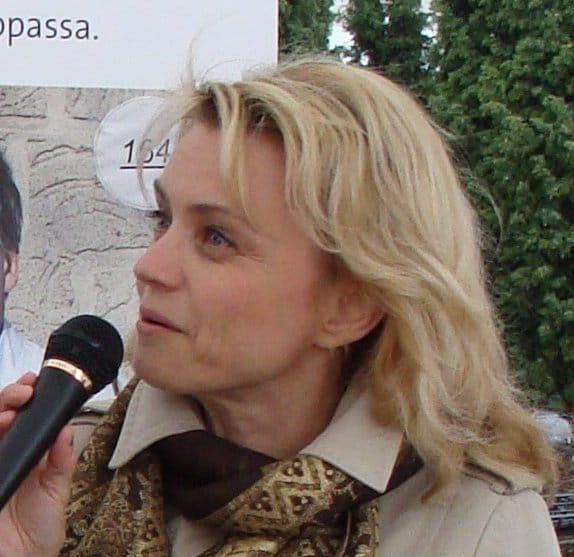
In a 3–2 decision, the court convicted Finnish parliamentarian Päivi Räsänen and the internet publisher of a text connected to a 2004 pamphlet on marriage and sexual ethics, while dismissing a separate charge tied to her 2019 social-media post quoting Scripture. The lower courts had dismissed all charges. The Supreme Court however, ordered fines, required the removal of the unlawful passages from the online publication, and said the conviction did not violate Finland’s protections for freedom of expression and freedom of religion. Reuters reported Räsänen’s personal fine at 1,800 euros and noted that she is considering an appeal to the European Court of Human Rights.
The specifics matter. According to the Supreme Court’s own summary, the conviction was not about the original print publication itself, but about making the text available online and keeping it publicly available. The court said some passages were derogatory toward homosexuals as a group because they described homosexuality as an aberration of psychosexual development and as sexual deviation. At the same time, the court unanimously acquitted Räsänen on the social-media count, ruling that when her post was read in context, including the attached Bible passage, it did not meet the legal threshold for the offense. Yle later reported that the court viewed the offending pamphlet passages not as protected religious teaching as such, but as the author’s social and medical claims.
That distinction is precisely why the ruling will continue to echo.
This case is not only about Finland. It is about the modern democratic instinct to say, on paper, that freedom of expression is essential, while increasingly narrowing the range of convictions that may be voiced without legal risk. Article 10 of the European Convention on Human Rights says everyone has the right to freedom of expression, including the freedom to hold opinions and to receive and impart information and ideas without interference by public authority. The Council of Europe calls freedom of expression “one of the essential foundations of a democratic society,” and the U.N. Special Rapporteur on freedom of opinion and expression describes it as a cornerstone of democracy.
Of course, European law does not treat speech as absolute. Article 10 also allows restrictions that are prescribed by law and “necessary in a democratic society” for reasons including public safety and the protection of the rights of others. That is what makes this case so significant. The central debate is not whether speech can ever be limited. It can. The real question is where the line should be drawn between punishing true incitement and punishing the peaceful expression of moral, religious, or political conviction.
That line matters because once it begins to move, it rarely moves only once.
When free speech is taken away, a society does not merely lose a few provocative statements from public view. It loses the very freedom that make it a democracy. People begin to speak with one eye on the law and the other on the crowd. Conscience grows cautious. Citizens learn the etiquette of self-censorship. Teachers soften what they mean before they say it. Journalists avoid questions that might cause issues. Pastors begin to wonder which doctrines are still welcome in public and which must be buried indoors. At first, it looks like civility. Eventually, it becomes fear.
This is how platforms, townhalls and public squares shrinks. Not all at once, and not usually with tanks in the street. It shrinks through precedent. Through categories. Through legal interpretations that teach ordinary people what is now too dangerous to say.
That is why this ruling touches something larger than one pamphlet, one politician, or one dispute over sexual ethics. Free speech is not only about the protection of speech we enjoy. It is, more importantly, about the protection of speech that tests a society’s tolerance, speech that unsettles consensus, speech that reveals whether a democracy still believes citizens are mature enough to hear ideas they despise without demanding the state erase them.
For Christians, this conversation requires both honesty and humility.
We should be the first to admit that free speech is not a license for cruelty. Scripture never commands believers to be needlessly harsh, contemptuous, or reckless with words. Christians are told to speak the truth in love. We are told to let our speech be gracious. We are told to make a defense with gentleness and respect. A Christian defense of free speech should never become a defense of verbal aggression.
But neither should a Christian commitment to love become a pretext for silence.
The Bible is full of people who spoke because conscience would not let them do otherwise. The apostles, when told to stop speaking publicly in the name of Jesus, answered with startling clarity: “We cannot but speak the things which we have seen and heard” (Acts 4:20, KJV). Later, when commanded again to be silent, Peter and the apostles said, “We ought to obey God rather than men” (Acts 5:29, KJV).
That is not a call to belligerence. It is a reminder that faith is not private in the modern therapeutic sense. Christian conviction has always had a public dimension. The gospel is proclaimed. Doctrine is taught. Moral truth is confessed. The church has never survived by retreating into the polite fiction that deeply held beliefs should stay hidden whenever they clash with elite consensus.
And that is why cases like this trouble so many believers well beyond Finland. The concern is that the boundaries of acceptable public speech are being redrawn in a way that tells citizens, in effect, that some beliefs may still be held, perhaps even quoted, but not interpreted, argued, or applied too plainly in public life.
That is a dangerous message for any democracy to send.
Once the government begins to arbitrate not just threats or incitement, but which moral frameworks may be voiced without penalty, every minority viewpoint becomes more vulnerable. Today the disputed speech may be traditional Christian teaching on sexuality. Tomorrow it may be dissent on bioethics, surveillance, education, AI, immigration, or state power itself. Governments rarely expand speech restrictions while promising they will be used only once.
The larger issue, then, is not whether free societies should protect vulnerable people. They should. The issue is whether democracies can still distinguish between protecting citizens from violence and intimidation, and protecting citizens from the mere existence of views they find offensive, painful, or wrong.
If they cannot, then democracy does not become more humane. It becomes more fragile.
And fragile societies are not strong societies. They are anxious societies. They cannot bear debate. They cannot tolerate moral confidence outside approved boundaries. They need administrative solutions for disagreements that older democracies once handled through argument, persuasion, and patient civic life.
Everyone should care about when free speech is limited and Christians should care because the right to religious speech is vital to sharing God's Word. Once speech is managed, even good causes are eventually harmed by the same machinery built to protect them. A censorship power created for one controversy never stays neatly there. It becomes part of the culture’s operating system.
That is why this ruling deserves attention from anyone concerned with religious liberty, freedom of expression, and the future of democratic life in Europe and beyond. Finland remains a democracy. This is not the language of panic. It is the language of warning. Democracies are not undone only by coups or dictators. They are also weakened when they slowly forget that liberty includes the right to speak wrongly, offensively, and controversially without being turned into a criminal example, so long as that speech does not cross the line into actual incitement or violence.
Räsänen has said the case is no longer only about her own speech, but about the speech rights of everyone in Finland. That may sound dramatic. It may also prove true. Because every age reveals its fears by the ideas it most wants to regulate. And one of the clearest signs of democratic confidence is whether a nation can endure contested speech without reaching first for punishment.
There is a Christian way to face such a moment. Not with rage. Not with panic. Not with the fantasy that believers can control the age they live in. But with courage, clarity, and disciplined speech. We tell the truth. We refuse malice. We honor the dignity of every person. And we resist the quiet pressure to believe that silence is the same thing as peace.
It is not.
Sometimes silence is only surrender with better manners.