

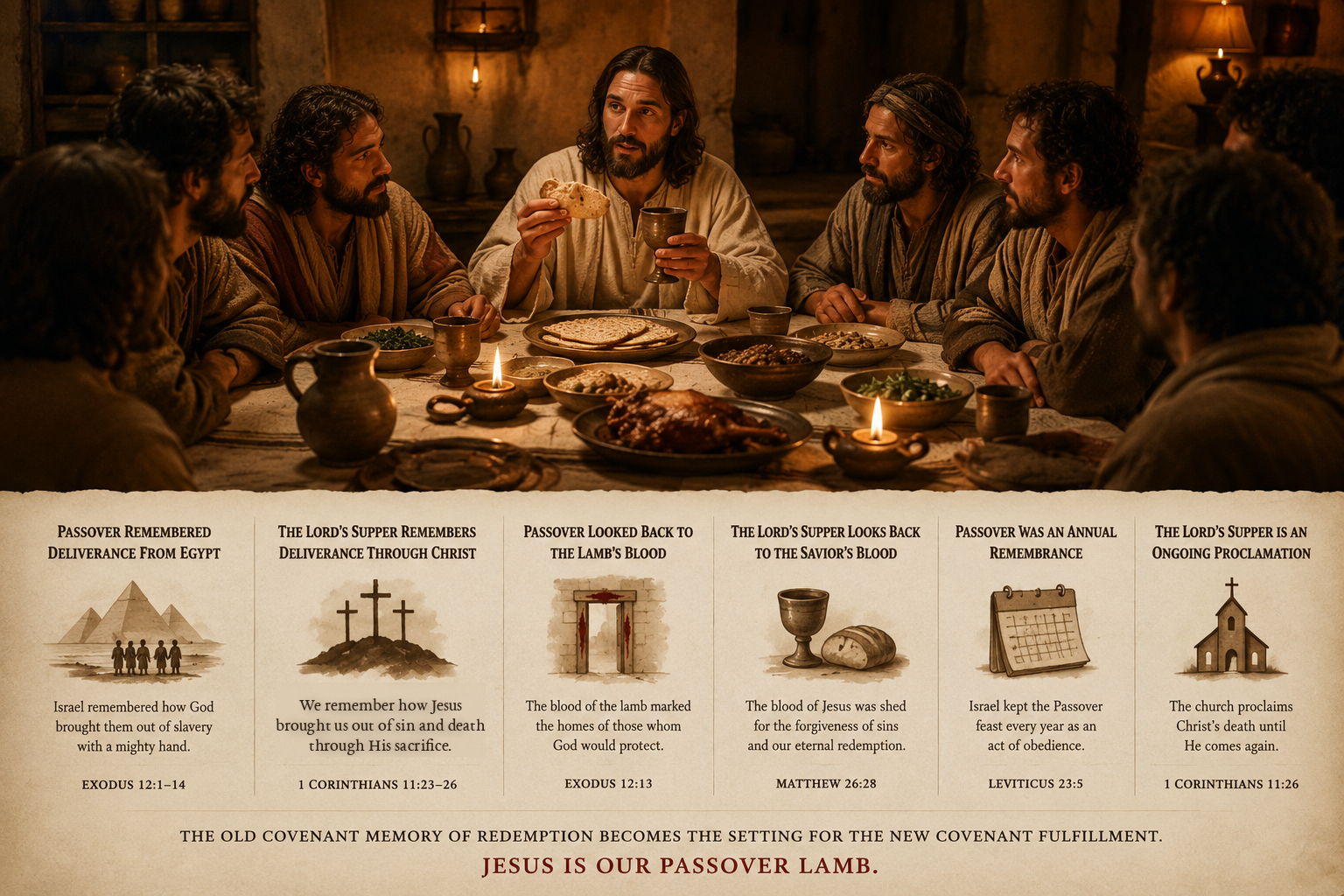
Passover wasn't just another religious meal. It was the night Israel learned that deliverance required blood, obedience, memory, judgment, and the mercy of God.
Before Passover became a feast, it was a crisis. Israel was enslaved in Egypt. Pharaoh refused to release God’s people. The Lord sent plague after plague, confronting Egypt’s gods, Pharaoh’s pride, and the empire that had built itself on oppression. Then came the final plague: the death of the firstborn.
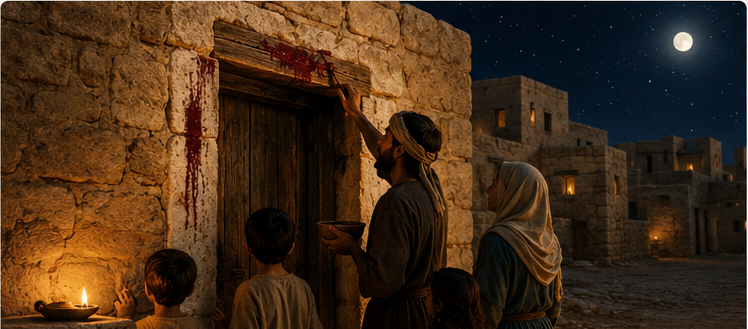
In that fearful moment, God gave Israel instructions. Each household was to take a lamb without blemish, slaughter it, place its blood on the doorposts and lintel of the house, and eat the meal in haste. That night, judgment passed through Egypt. But wherever the blood marked the house, the Lord “passed over” His people.
Passover became one of the defining memories of Israel’s life with God. It taught every generation that they were rescued because God heard their cry, remembered His covenant, judged evil, and made a way of deliverance.
For Christians, Passover is also one of the clearest Old Testament shadows pointing to Jesus Christ. The New Testament identifies Jesus as “our Passover lamb” who has been sacrificed for us (1 Corinthians 5:7). To understand Passover is to understand more deeply the meaning of redemption, judgment, sacrifice, freedom, and salvation.
What Was Passover in the Bible?
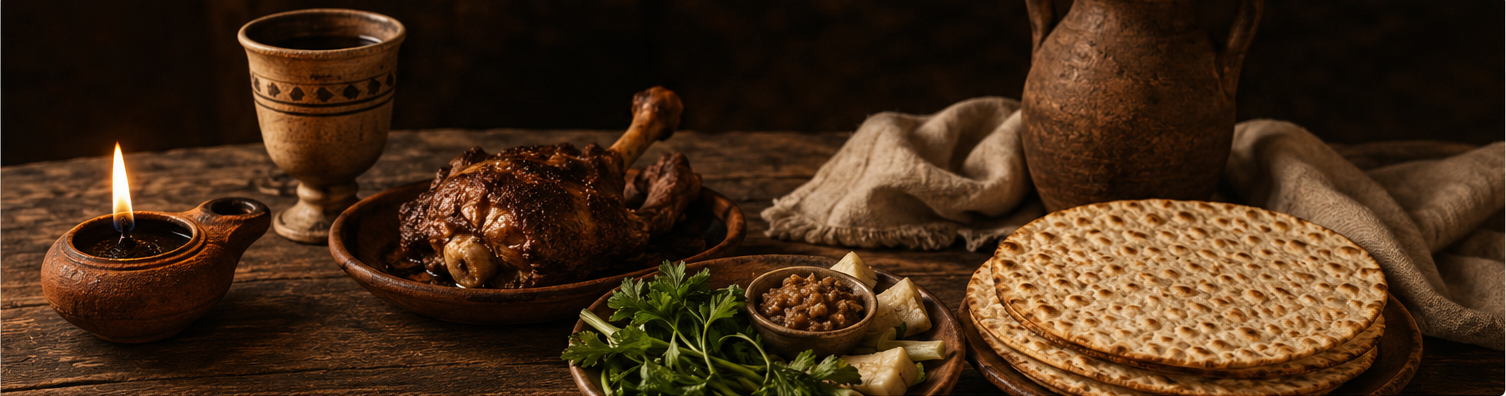
Passover was the annual feast Israel observed to remember how God delivered them from slavery in Egypt. The Hebrew name is Pesach, which is connected to the idea of passing over, sparing, or protecting. The name comes from the night when the Lord passed over the houses marked by the blood of the lamb and spared Israel from the judgment that fell on Egypt.
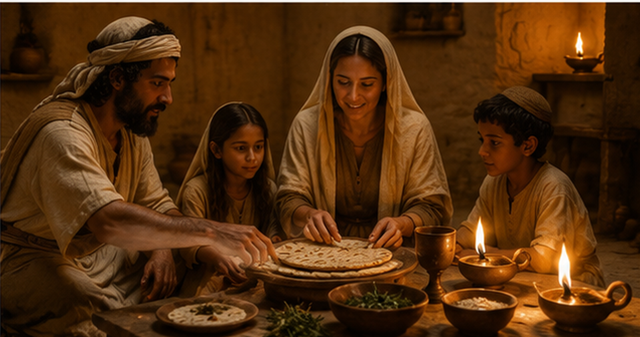
The first Passover is described in Exodus 12. God commanded each Israelite household to take a lamb without blemish, kill it at twilight, apply its blood to the doorway, and eat the meal with unleavened bread and bitter herbs. They were to eat dressed for departure, with sandals on their feet and staff in hand, because God was about to bring them out of Egypt quickly.
Passover was both a historical event and an ongoing memorial. It looked back to the Exodus, but it also shaped Israel’s identity for generations. Every year, Israel was to remember: “We were slaves, and the Lord brought us out.”
This made Passover more than a national holiday. It was a theological declaration. Israel belonged to the God who redeems.
Where Passover Appears in Scripture
The foundation of Passover appears in Exodus 12, where God gives Moses and Aaron instructions for the first Passover night. This chapter explains the lamb, the blood on the doorposts, the unleavened bread, the bitter herbs, the urgency of the meal, and the command to observe the feast throughout future generations.
Passover is later reinforced in the Law of Moses. Leviticus 23 lists Passover among the appointed feasts of the Lord. Numbers 9 records Israel keeping Passover in the wilderness. Deuteronomy 16 connects Passover with worship at the place where the Lord would cause His name to dwell.
Passover also appears at important renewal moments in Israel’s history. Joshua and the people observed Passover after entering the promised land (Joshua 5:10–12). King Hezekiah restored Passover worship during a time of spiritual reform (2 Chronicles 30). King Josiah also kept a great Passover as part of national repentance and covenant renewal (2 Kings 23:21–23; 2 Chronicles 35).
In the New Testament, Passover forms the background of the final days of Jesus’ earthly ministry. The Gospels place Jesus’ death in connection with Passover season. The Last Supper takes place in this setting, and the language of lamb, blood, covenant, deliverance, and sacrifice reaches its fulfillment in Christ.
Historical and Cultural Background
To understand Passover, we have to begin with slavery.
The Israelites had gone down to Egypt during the days of Joseph because of famine. At first, Egypt became a place of provision. But over time, a new Pharaoh arose who did not know Joseph. The Israelites multiplied, and Egypt began to fear them. Pharaoh enslaved them, oppressed them with harsh labor, and even commanded the killing of Hebrew male infants.
The Exodus story is not simply about one nation escaping another. It is about God confronting a kingdom built on bondage. Egypt represented power without mercy, wealth built on oppression, and false gods unable to save. Pharaoh acted as though he owned Israel, but God declared Israel to be His people.
When Moses came before Pharaoh, the command was clear: “Let my people go, that they may serve me” (Exodus 8:1). Freedom was not merely political. Israel was being delivered from slavery to worship. They were being brought out from under Pharaoh’s rule so they could live under the covenant rule of God.
The plagues were not random disasters. They revealed the Lord’s authority over creation, Egypt, Pharaoh, and the so-called gods of Egypt. The final plague, the death of the firstborn, was the most severe judgment. It struck at the future of Egypt’s households and the house of Pharaoh itself.
Passover happened in that moment of judgment. It showed that Israel’s rescue was not sentimental. God was judging evil. But He also provided a covering for His people through the blood of the lamb.
When Passover Was Observed
Passover was observed on the fourteenth day of the first month of Israel’s religious calendar, the month of Nisan or Abib. According to Exodus 12, this month became the beginning of months for Israel because their national life as a redeemed people began with God’s deliverance.
Passover was closely connected to the Feast of Unleavened Bread, which began immediately after it and lasted seven days. Because the two observances were so closely joined, Scripture sometimes speaks of them together.
The timing mattered. Passover was not placed randomly on Israel’s calendar. It marked the beginning of Israel’s redeemed identity. Their year began with the memory of deliverance. Before harvest celebrations, before national victories, before temple worship in Jerusalem, Israel’s calendar began with the truth that God saved them from bondage.
This rhythm taught Israel to measure time by redemption. Every year, families retold the story. Children learned why the meal mattered. The nation remembered that their existence was not self-made. They were a delivered people.
Why Israel Observed Passover
Israel observed Passover because God commanded them to remember.
In Exodus 12:14, the Lord says, “This day shall be for you a memorial day, and you shall keep it as a feast to the Lord.” Passover was meant to preserve the memory of God’s saving act. Without remembrance, Israel would be tempted to forget who delivered them, why they existed, and what kind of people they were called to be.
Passover taught Israel several truths at once.
It taught them that slavery was real, but God was greater than their bondage. It taught them that Pharaoh was powerful, but not sovereign. It taught them that judgment was serious, but mercy was available. It taught them that obedience mattered. And it taught them that no man no matter the position is greater than God. The Israelites were commanded to act in faith by applying the blood, eating the meal, and preparing to leave.
Passover also taught that redemption was costly. A lamb without blemish died. Its blood marked the house. The family lived because God provided a way through judgment.
This is why Passover became such a central part of Israel’s identity. It was the story they had to keep telling: the Lord brought us out with a mighty hand.
What Caused Passover to Happen?
Passover happened because Israel was enslaved, Pharaoh refused to obey God, and the Lord acted to deliver His covenant people.
The immediate cause was Pharaoh’s hardened resistance. Again and again, he refused to let Israel go. Each refusal intensified the confrontation. The plagues exposed the futility of Egypt’s power and the stubbornness of Pharaoh’s heart.
But the deeper cause goes back to God’s covenant promises. God had made promises to Abraham, Isaac, and Jacob. He promised land, descendants, blessing, and covenant relationship. Israel’s slavery did not cancel those promises. Exodus 2 says God heard Israel’s groaning, remembered His covenant, saw the people, and knew.
Passover happened because God remembered.
That does not mean God had forgotten Israel. In Scripture, when God “remembers,” He acts faithfully according to His covenant. Passover was the moment when God’s covenant faithfulness broke into history with judgment and deliverance.
The feast was born from oppression, but it was not defined by oppression. It was defined by God’s power to save.
The Meaning of the Lamb
The lamb stands at the center of Passover.
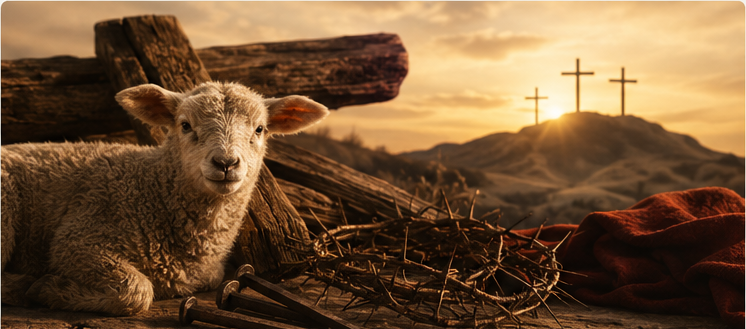
Each household was to take a lamb without blemish. The lamb was examined, killed, and eaten. Its blood was placed on the doorposts. The blood was not decorative. It was a sign. God said, “When I see the blood, I will pass over you” (Exodus 12:13).
The lamb teaches that deliverance came through substitution and sacrifice. The firstborn in the marked houses lived, but a lamb died. The household was spared, but not because judgment was imaginary. Judgment passed over because God provided a covering.
The lamb also had to be eaten. Passover was not only about blood on the door; it was also about participation in the meal. The people inside the house were nourished for the journey ahead. They ate in haste because deliverance required readiness.
This combination of sacrifice, blood, meal, and departure gives Passover its deep theological richness. It was not only about escaping Egypt. It was about being redeemed by God and formed into a people who would walk with Him.
The Meaning of Unleavened Bread and Bitter Herbs
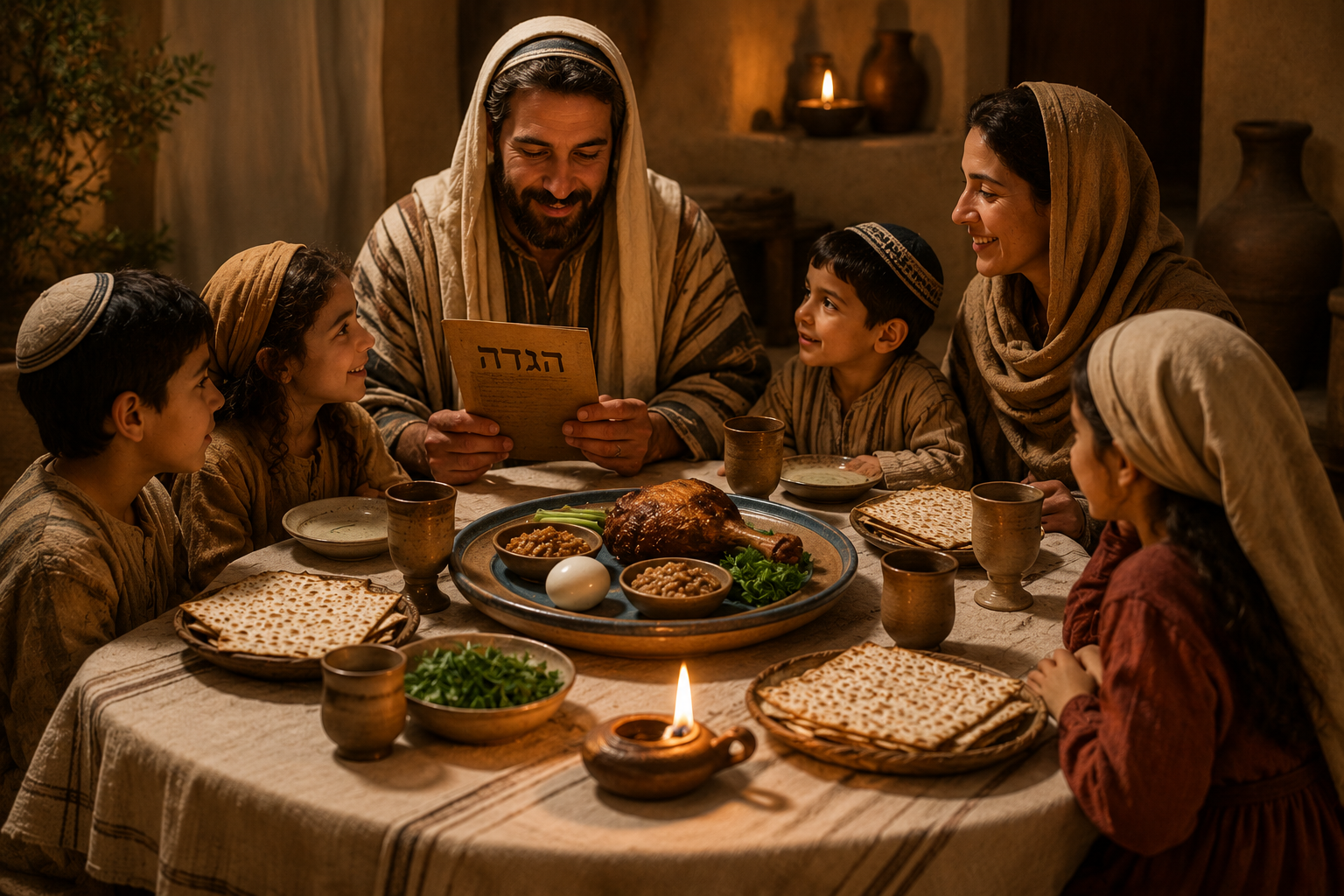
Passover was eaten with unleavened bread and bitter herbs.
The unleavened bread reminded Israel of the urgency of their departure. They left Egypt quickly, without time for dough to rise. But unleavened bread also became a symbol of separation from the old life. During the Feast of Unleavened Bread, leaven was removed from the house.
In later biblical reflection, leaven could symbolize corruption or sin, though its meaning depends on context. In connection with Passover, removing leaven became a physical act of cleansing, remembrance, and separation.
The bitter herbs reminded Israel of the bitterness of slavery. God did not want His people to romanticize Egypt. The meal forced them to remember that bondage was painful. Egypt may later have seemed attractive in moments of wilderness frustration, but Passover told the truth: slavery was bitter and not what God wanted for His people.
Together, the bread and herbs told a story through taste. The meal was theology made visible and edible. It taught children not only through words, but through embodied memory for all generations.
What Passover Pointed To
Passover pointed to redemption.
It showed that God saves His people from bondage, judges evil, provides a substitute, and brings His people into a new life of covenant obedience. The Exodus became the great salvation event of the Old Testament. Again and again, Israel looked back to it as proof that the Lord was their Redeemer.
Passover also pointed to a greater deliverance still to come.
The prophets often used Exodus language when speaking of future restoration. Israel would need deliverance not only from Egypt, but from sin, exile, rebellion, and spiritual bondage. The hope of redemption grew deeper as Israel’s story unfolded.
Passover pointed forward because the Exodus, as great as it was, did not solve the deepest human problem. Israel left Egypt, but sin still traveled with them into the wilderness. They were freed from Pharaoh, but they still needed cleansing, forgiveness, new hearts, and lasting reconciliation with God.
This is why Passover prepares the reader for Jesus.
Jesus and the Passover
The New Testament presents Jesus as the fulfillment of Passover’s deepest meaning.
John the Baptist identifies Jesus as “the Lamb of God, who takes away the sin of the world” (John 1:29). This statement does not flatten every Old Testament sacrifice into one image, but it clearly places Jesus in the world of sacrificial redemption. He is the Lamb provided by God.
The timing of Jesus’ death is also deeply connected to Passover. The Gospels present the final week of Jesus’ life during Passover season. The Last Supper takes place in that setting, where Jesus takes bread and cup and speaks of His body and blood. He announces a new covenant, not sealed by the blood of animals, but by His own blood.
Paul makes the connection explicit: “Christ, our Passover lamb, has been sacrificed” (1 Corinthians 5:7).
Jesus fulfills Passover because He brings a greater Exodus. He does not merely rescue people from political slavery. He delivers sinners from sin, death, judgment, and the kingdom of darkness. His blood does not mark wooden doorposts in Egypt. His blood secures eternal redemption for all who belong to Him.
At the cross, judgment and mercy meet. Sin is not ignored. Evil is not excused. God’s holiness is not lowered. Yet mercy is given because Christ offers Himself as the sacrifice.
Passover helps us see why the cross was necessary. Salvation is not God pretending sin does not matter. Salvation is God providing the Lamb.
Passover and the Lord’s Supper
The Lord’s Supper cannot be properly understood without Passover in the background.
At the Last Supper, Jesus shared a meal with His disciples during Passover season. He took bread and said, “This is my body.” He took the cup and spoke of His blood of the covenant. In doing this, Jesus transformed the meaning of the meal around Himself.
Passover remembered deliverance from Egypt. The Lord’s Supper remembers deliverance through Christ.
Passover looked back to the lamb whose blood marked Israel’s homes. The Lord’s Supper looks back to the Savior whose blood was shed for the forgiveness of sins.
Passover was repeated annually by Israel. The Lord’s Supper is practiced by the church as an ongoing proclamation of Christ’s death until He comes.
This does not mean the Lord’s Supper is a Christian version of the Passover. But it does mean that Jesus intentionally used Passover language and imagery to reveal the meaning of His death. The old covenant memory of redemption becomes the setting for the new covenant fulfillment.
How Passover Shaped Israel’s Daily Life
Passover shaped Israel by making memory a form of discipleship.
Every year, families had to retell the story. Children were expected to ask questions. Parents were expected to explain. The feast trained Israel to pass faith from one generation to the next.
This mattered because forgetfulness was one of Israel’s greatest dangers. After deliverance, the people often complained in the wilderness. They remembered Egypt’s food but forgot Egypt’s chains. Passover corrected that false memory. It reminded them that bondage was bitter, deliverance was gracious, and freedom belonged to God.
Passover also shaped Israel’s understanding of justice. They knew what it meant to be oppressed strangers in a foreign land. This memory was supposed to affect how they treated the vulnerable, the poor, the foreigner, and the powerless.
The feast also shaped worship. Israel’s worship was rooted in history. They did not worship an abstract idea of God. They worshiped the Lord who acted in time, judged Pharaoh, brought them through the sea, fed them in the wilderness, and made covenant with them.
Passover taught Israel that faith is not detached from memory. To remember rightly is to worship rightly.
Why Passover Still Matters Today
Passover matters today because it helps Christians understand the Bible’s story of redemption.
Many people read the Bible as a collection of disconnected moral lessons. Passover shows us that Scripture is telling one unfolding story: creation, fall, covenant, bondage, deliverance, sacrifice, worship, kingdom, exile, promise, Messiah, cross, resurrection, final judgement and new creation.
Passover also reminds us that God hears the cries of the oppressed. The Exodus begins with groaning. God sees, hears, remembers, and acts. This does not mean God always delivers according to human timing, but it does reveal His character. He is not indifferent to suffering.
Passover teaches that freedom is not escape from hardship. Israel was freed from Pharaoh in order to belong to God. In the same way, Christian salvation is not simply freedom from guilt or hell. It is freedom for worship, obedience, holiness, and life with God.
Passover also deepens our understanding of Jesus. When we call Jesus the Lamb of God, we are not using sentimental religious language. We are saying that He is the sacrifice God provided, the Redeemer who saves, the One whose blood brings deliverance from judgment.
Without Passover, we may shrink the cross into a symbol of love alone. The cross is certainly the display of God’s love, but it is also the place of sacrifice, judgment, substitution, covenant, victory, and redemption.
Passover, Memory, and Identity
One of the most important parts of Passover is that it turned memory into identity.
Israel was not allowed to forget Egypt, but they were also not allowed to remain defined by Egypt. They remembered slavery so they could understand grace. They remembered oppression so they could practice justice. They remembered deliverance so they could worship the Redeemer.
This is important for Christians today. Biblical memory is not nostalgia. It is formation. We remember what God has done so that we can live faithfully in the present.
The church does something similar when it gathers around the Lord’s Table. Christians remember Christ’s death, not as distant information, but as the center of our life with God. We remember because we are people who have been redeemed.
What the Passover Teaches Us
Passover teaches us that redemption begins with God. Israel did not rescue itself. The people did not negotiate their own freedom, overpower Pharaoh, or create a path out of bondage by human strength. God heard. God remembered. God judged. God provided. God delivered.
That is why Passover still speaks.
It reminds us that sin is bondage, judgment is real, mercy is costly, and salvation comes through the Lamb God provides. For Israel, Passover marked the night God brought His people out of Egypt. For Christians, it points us to the greater deliverance accomplished through Jesus Christ.
The blood on the doorposts told Israel that judgment had passed over. The blood of Christ tells believers that redemption has been secured.
Passover is not only ancient history. It is part of the Bible’s great announcement that God saves His people, keeps His promises, and makes a way where bondage seemed final.