

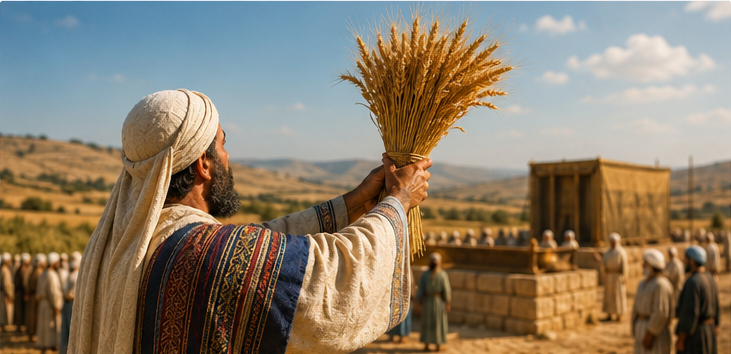
Before Israel gathered the fullness of the harvest, they were commanded to bring the first portion to God.
That act may seem simple at first. A sheaf of grain. A priest. A harvest field. An offering lifted before the Lord. But the Feast of Firstfruits carried a message much larger than agriculture. It taught Israel that the land belonged to God, the harvest came from God, and the future depended on God.
Firstfruits was an act of worship before abundance was fully seen. Israel brought the first sheaf before storing the rest. They honored God before enjoying the harvest. They acknowledged His provision before counting their gain.
In the Old Testament, Firstfruits was tied to the beginning of the harvest season. In the New Testament, the language of firstfruits becomes one of the most powerful ways to understand the resurrection of Jesus Christ. Paul writes, “But in fact Christ has been raised from the dead, the firstfruits of those who have fallen asleep” (1 Corinthians 15:20).
That means the resurrection of Jesus is not an isolated miracle. It is the beginning of a greater harvest still to come. Just as the first sheaf represented the promise of the full harvest, Christ’s resurrection is the guarantee that all who belong to Him will also be raised.
What Was the Feast of Firstfruits?
The Feast of Firstfruits was an Old Testament harvest offering in which Israel presented the first sheaf of grain to the Lord. It was not a feast in the modern sense of a large meal or festival gathering. It was a sacred offering that marked the beginning of the harvest and acknowledged God as the source of Israel’s provision.
The central instruction appears in Leviticus 23. After Israel entered the land God promised them and began to reap its harvest, they were to bring a sheaf of the firstfruits to the priest. The priest would wave the sheaf before the Lord so that it would be accepted on behalf of the people (Leviticus 23:10–11).
This offering was deeply symbolic. Israel was not to treat the harvest as something they owned independently. Before they ate from it, profited from it, or stored it away, they brought the first portion to God.
Firstfruits taught Israel that the first and best belonged to the Lord. It was an act of trust, gratitude, and covenant obedience. By giving God the first of the harvest, Israel confessed that the rest of the harvest also came from Him.
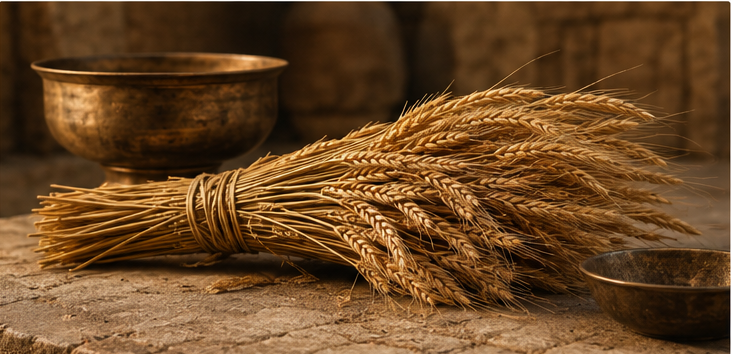
Where the Feast of Firstfruits Appears in Scripture
The most direct command for the Feast of Firstfruits appears in Leviticus 23:9–14. This chapter lists the appointed feasts of the Lord, including the Sabbath, Passover, Unleavened Bread, Firstfruits, the Feast of Weeks, the Feast of Trumpets, the Day of Atonement, and the Feast of Booths.
Firstfruits is also connected to the broader biblical command to honor God with the first and best. Exodus 23:19 says, “The best of the firstfruits of your ground you shall bring into the house of the Lord your God.” Proverbs 3:9 also says, “Honor the Lord with your wealth and with the firstfruits of all your produce.”
There were different kinds of firstfruits offerings in Israel’s life. Sometimes the word referred broadly to giving God the first portion of produce, grain, oil, wine, or increase. But the specific Feast of Firstfruits in Leviticus 23 focused on the first sheaf of the grain harvest, often associated with the barley harvest during the season of Passover and Unleavened Bread.
The New Testament picks up the language of firstfruits in a deeply theological way. Jesus is called “the firstfruits of those who have fallen asleep” in 1 Corinthians 15:20. Paul also says, “Christ the firstfruits, then at his coming those who belong to Christ” (1 Corinthians 15:23).
That connection helps Christians see the Feast of Firstfruits as part of the larger biblical story of promise, fulfillment, resurrection, and new creation.
Historical and Cultural Background
Ancient Israel was an agricultural society. The people depended on the land, the rains, the seasons, and the harvest. Grain was not simply a commodity. It was daily bread, survival, economic stability, and evidence of God’s covenant faithfulness.
When God brought Israel out of Egypt, He was bringing them from slavery into a land described as flowing with milk and honey. The land was a gift. The harvest was a gift. The ability to plant, reap, eat, and live in freedom was a gift.
Firstfruits reminded Israel of that truth.
In Egypt, Israel had worked under oppression. Their labor enriched Pharaoh. Their strength served an empire that did not love them. But in the promised land, their work was to be lived before God. The harvest was not the result of human labor. It was the result of God’s provision, covenant, and kindness.
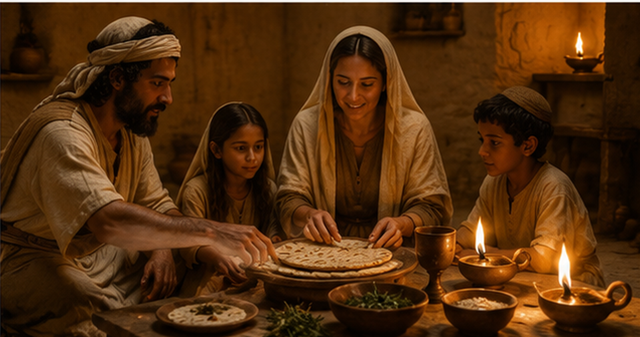
The Feast of Firstfruits also came during a meaningful season. It was closely connected to Passover and the Feast of Unleavened Bread. Passover remembered deliverance from Egypt. Unleavened Bread remembered the urgency of Israel’s departure and the call to remove leaven. Firstfruits then looked at the land and said: the God who delivered us is also the God who provides for us.
This sequence matters.
Israel was not delivered into emptiness. God brought them out of bondage and into inheritance. The first sheaf was a sign that God’s promise had become tangible. The people who once made bricks for Pharaoh now held harvest from the land God had given them.
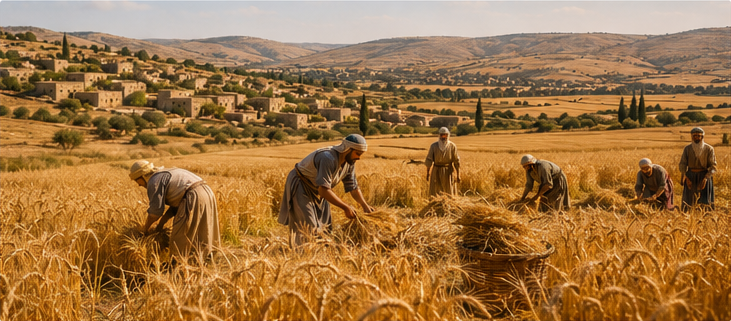
When the Feast of Firstfruits Was Observed
According to Leviticus 23, the sheaf of firstfruits was waved before the Lord “on the day after the Sabbath” during the season connected to Passover and Unleavened Bread (Leviticus 23:11).
This timing has been discussed in Jewish and Christian interpretation because “the Sabbath” has been understood in more than one way. Some have connected it to the weekly Sabbath during the Feast of Unleavened Bread, while others have understood it in relation to the festival day itself. But the main point remains clear: Firstfruits was observed at the beginning of the grain harvest, closely tied to the Passover season.
Because Israel had to honor God first, the offering came before the people were permitted to eat bread, roasted grain, or fresh grain from the new harvest (Leviticus 23:14).
Firstfruits also began a countdown. From the day the sheaf was waved, Israel counted seven full weeks leading to the Feast of Weeks, also known as Pentecost (Leviticus 23:15–16). This connected the early harvest to the later harvest celebration.
So Firstfruits stood at the beginning of harvest, while Pentecost marked a later fullness. Together, they formed a rhythm of gratitude: God gives the first, God sustains the process, and God brings the harvest to completion.
Why Israel Observed Firstfruits
Israel observed Firstfruits because God commanded His people to recognize Him as the giver of the harvest.
This was not simply about crops. It was about worship. The first sheaf represented trust. Israel gave to God before the barns were full, before the harvest was complete, and before they had secured the season’s abundance.
That required faith.
To give God the first portion is different from giving Him what is left over. Leftovers do not require the same trust. Firstfruits forced Israel to make a confession: “Lord, before we consume this harvest, we acknowledge that it belongs to You.”
The offering also protected Israel from pride. Harvest can make people feel self-sufficient. When fields are full, people can begin to believe they are the source of their own security. Firstfruits interrupted that illusion.
It reminded Israel that human labor matters, but human labor is not ultimate. Farmers plow, plant, water, and reap, but only God gives life to the seed. Only God sends rain. Only God sustains the land. Only God turns waiting into harvest.
Firstfruits was a spiritual discipline against forgetfulness.
What Caused the Feast of Firstfruits to Happen?
The Feast of Firstfruits was caused by Israel’s entrance into the land and God’s command concerning the harvest.
Leviticus 23 begins the instruction by saying, “When you come into the land that I give you and reap its harvest…” (Leviticus 23:10). This means Firstfruits was tied to Israel’s future life in Canaan. It anticipated the day when Israel would no longer be wandering in the wilderness but living in the land of promise.
That is important because the wilderness was a place where Israel depended daily on manna. They could not plant fields in the same settled way. They could not gather a normal harvest. God fed them directly from heaven.
But in the land, Israel would experience a different form of provision. They would plant, harvest, work, and steward the land. The danger was that they might forget the Provider because provision came through ordinary means.
Firstfruits was given to guard against that danger.
It taught Israel that settled life did not make them less dependent on God. The land was His. The harvest was His. Their future was His. Even after the wilderness, they still lived by grace.
What the First Sheaf Represented
The first sheaf represented the beginning of the harvest and the promise of more to come.
A sheaf was not the whole field. It was a portion. Yet that portion stood for the larger harvest. When the priest waved the sheaf before the Lord, Israel was acknowledging that the entire harvest belonged to God.
The first sheaf also carried hope. If there were firstfruits, there was harvest. The first portion signaled that the season of waiting was turning into the season of gathering.
This is one reason the language becomes so meaningful in the New Testament. Firstfruits is not only about what comes first in time. It is about what comes first as a pledge, sign, and guarantee of what follows.
The first sheaf says, “More is coming.”
That is the heart of why Firstfruits points so beautifully to the resurrection.
How Firstfruits Points to the Resurrection
The Feast of Firstfruits points to the resurrection because it provides a biblical picture of the first portion guaranteeing the future harvest.
In 1 Corinthians 15, Paul is defending the truth of bodily resurrection. Some in Corinth were questioning whether the dead are raised. Paul answers by pointing to the resurrection of Jesus. If Christ has not been raised, Christian faith is empty. But Christ has been raised. And because He has been raised, His resurrection becomes the beginning of what God will do for all who belong to Him.
Paul writes, “But in fact Christ has been raised from the dead, the firstfruits of those who have fallen asleep” (1 Corinthians 15:20).
This is not just a poetic phrase. It is a theological claim.
Jesus is the firstfruits because His resurrection is the first part of the coming resurrection harvest. He is not just a person who came back from the dead. Others in Scripture were raised temporarily, such as Lazarus, but they would die again. Jesus rose in resurrection life, never to die again.
His resurrection is the beginning of new creation.
When Jesus rose from the dead, God was not only vindicating His Son. He was announcing the future of all who are united to Christ. The empty tomb is the first sheaf of a coming harvest. Christ has been raised, and those who belong to Him will be raised when He comes.
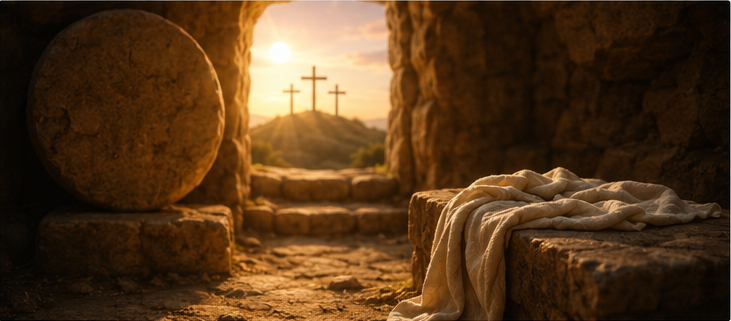
Jesus as the Firstfruits
Calling Jesus the firstfruits means His resurrection is both first and representative.
He is first because He rises ahead of His people in glorified, death-conquering life. He is representative because what happens to Him guarantees what will happen to those who are in Him.
Paul explains this clearly in 1 Corinthians 15:22–23: “For as in Adam all die, so also in Christ shall all be made alive. But each in his own order: Christ the firstfruits, then at his coming those who belong to Christ.”
Adam represents humanity in sin and death. Christ represents His people in righteousness and resurrection. Adam’s rebellion brought death. Christ’s victory brings life.
This is why the resurrection is not optional or secondary in Christian faith. It is central. If Jesus is firstfruits, then resurrection is not only something that happened to Him. It is something promised to His people.
The resurrection of Jesus is God’s pledge that death does not get the final word.
Firstfruits, Passover, and Unleavened Bread
The timing of Firstfruits is important because it is closely connected to Passover and Unleavened Bread.
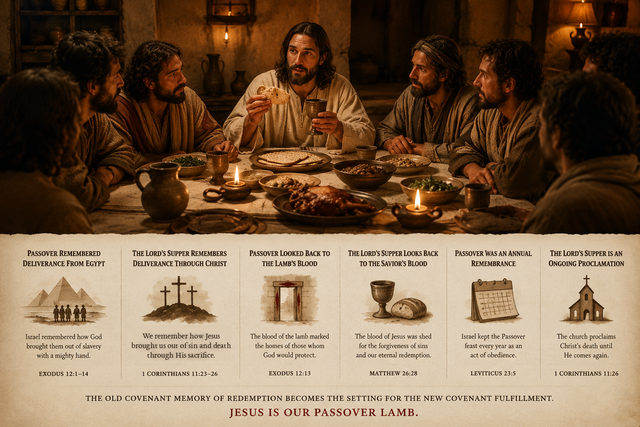
Passover remembered deliverance through the blood of the lamb. Unleavened Bread remembered Israel’s separation from Egypt and the haste of their departure. Firstfruits celebrated the beginning of harvest in the land God had given.
Together, these feasts form a powerful movement:
Passover speaks of redemption.
Unleavened Bread speaks of separation and new life.
Firstfruits speaks of the beginning of harvest and the promise of what is still to come.
For Christians, this sequence finds profound meaning in Jesus. He is the Lamb of God. He is without sin. He rises from the dead as the firstfruits of the resurrection harvest.
The New Testament does not present the resurrection as disconnected from Israel’s story. It presents Jesus as the fulfillment of the story Israel’s feasts had been telling all along.
Firstfruits and Pentecost
Firstfruits also points forward to Pentecost.
Leviticus 23 commands Israel to count seven full weeks from the day the first sheaf was waved. The fiftieth day became the Feast of Weeks, later known as Pentecost. This later feast celebrated a fuller harvest offering.
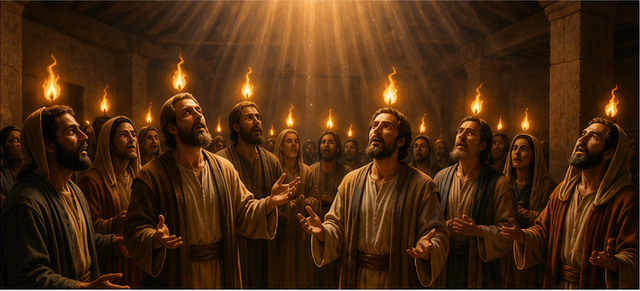
This connection matters for the New Testament. Jesus rises as the firstfruits. Then, at Pentecost, the Holy Spirit is poured out and the church begins to proclaim the gospel with power (Acts 2).
The pattern is striking. First comes the risen Christ. Then comes the Spirit-empowered harvest.
At Pentecost, thousands respond to the preaching of Peter and are added to the community of believers. The harvest imagery becomes spiritually visible. The risen Christ is gathering people from Israel and, eventually, from the nations.
Firstfruits begins the harvest. Pentecost expands it.
How Firstfruits Shaped Israel’s Daily Life
Firstfruits shaped Israel’s daily life by teaching the people to put God first in the ordinary rhythms of work, food, land, and increase.
Faith was not limited to the tabernacle or temple. It reached into the field. It touched the harvest. It shaped how families thought about provision, income, labor, and gratitude.
Every year, Firstfruits reminded Israel that worship involved more than words. It involved the first portion of what they had received. It required them to bring something tangible before God.
This practice formed humility. It taught farmers, families, priests, and communities that prosperity was not self-generated. It also formed patience. The people had to wait before eating from the new harvest. Desire had to submit to obedience.
That is not a small lesson.
Much of spiritual life is learned in the ordering of desire. Firstfruits trained Israel to say, “God comes first.” Not after satisfaction. Not after storage. Not after calculation. First.
Why Firstfruits Still Matters Today
Firstfruits still matters because it teaches Christians how to understand provision, worship, and resurrection.
In one sense, Christians are not required to observe the Old Testament Feast of Firstfruits as Israel did under the Mosaic covenant. The New Testament does not command the church to bring a sheaf of barley to a priest. Christ has fulfilled the law’s shadows and brought their deepest meaning into view.
But the theology of Firstfruits still speaks.
It reminds us that God deserves the first and best, not the forgotten and leftover. It confronts the illusion of self-sufficiency. It teaches gratitude before abundance is complete. It helps us see work, income, food, and provision as gifts from God.
Most importantly, Firstfruits helps us understand the resurrection. Jesus is not just an inspiring figure who defeated death. He is the beginning of the resurrection harvest. His empty tomb is the guarantee of what is coming for all who belong to Him.
This gives Christians hope in the face of death. Death is real, but it is not final. Grief is real, but it is not ultimate. The grave is real, but it is not stronger than the risen Christ.
Because Christ is the firstfruits, the future resurrection of His people is secured by what God has already done in Him.
Firstfruits as a Pattern of Faith
The idea of firstfruits reaches beyond one feast. Throughout Scripture, the first portion often represents devotion, priority, and belonging.
Israel was called God’s “firstfruits” in Jeremiah 2:3, meaning they were set apart for Him. Believers are described as a kind of firstfruits in James 1:18, showing that God’s work in His people anticipates something larger. Revelation 14:4 also uses firstfruits language for those redeemed for God and the Lamb.
This shows that firstfruits is more than agricultural vocabulary. It is a biblical pattern.
The first portion belongs to God.
The first sign points to what is coming.
The first act reveals trust.
The first harvest promises more.
That pattern reaches its highest point in Jesus Christ. He is the firstborn from the dead, the beginning of new creation, and the guarantee of the resurrection to come.
Why Firstfruits Still Speaks Today
The Feast of Firstfruits began with a sheaf of grain lifted before the Lord. It was simple, earthy, and deeply faithful. Israel stood at the edge of the harvest and confessed that everything came from God.
But in the resurrection of Jesus, Firstfruits becomes even more powerful. The first sheaf once promised the rest of the crop. The risen Christ now promises the resurrection of His people.
Firstfruits tells us that God finishes what He begins. He brings the harvest to completion.
Christ has been raised. That is the firstfruits.
And because He has been raised, those who belong to Him wait not in despair, but in hope. The harvest has begun, and the resurrection is coming.